Gamma-Ray Bursts explained

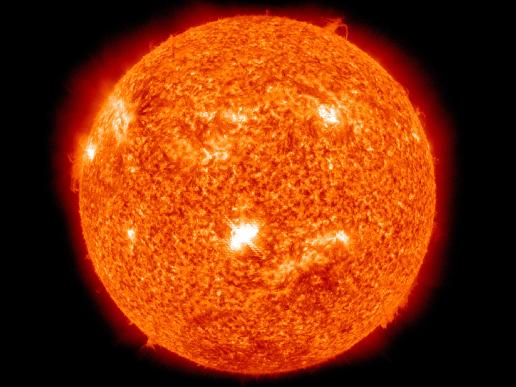
I have, from time to time, mentioned the potentially lethal, if spectacular, phenomenon known as a Gamma-Ray Burst in my occasional science posts.  By coincidence, the BBC have online digestible clips of past Horizon programmes.  Including this informative clip from 2001 explaining Gamma-Ray Bursts in stellar nurseries, with a suitably ominous narration.  Enjoy!  And, let’s be careful out there… Pete Baker
Mission to Mars…

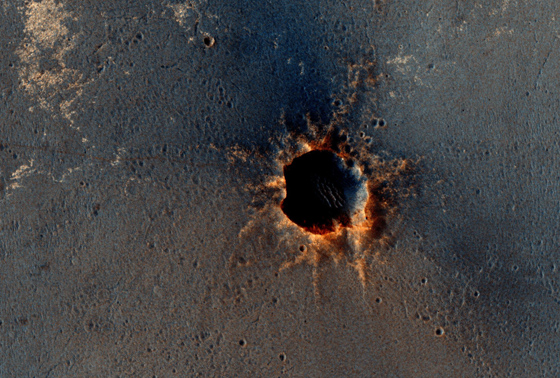
The US National Research Council have expressed doubts about the extent of US involvement in the planned joint ESA/Nasa rover mission to Mars, as well as two subsequent orbiter missions – one to the Jovian moon Europa and the other to Uranus. But, for now, Mars remains under close scrutiny.  The latest false colour image from the Hi-RISE camera on Nasa’s Mars Reconnaissance Orbiter shows the Mars rover Opportunity at the edge of a football-field sized crater, Santa Maria, where it’s been exploring …

Read more…

“It did its grand tour past the planets and it just goes on, on this voyage of discovery.”

The farthest man-made object from Earth, at some 17.4 billion kilometres, Nasa’s Voyager 1 spacecraft is still performing acrobatics 30-odd years after it was launched.  From the BBC report Voyager is executing a series of roll manoeuvres to get one of its instruments into the optimum position to measure particles sweeping away from the Sun. Controllers at the US space agency’s Jet Propulsion Laboratory in Pasadena, California, report a perfect response from the probe. “I liken Voyager to an old car,” …

Read more…

Final Flight of Discovery

After a number of postponements due to technical problems, the Space Shuttle Discovery is scheduled to lift-off for the last time from the Kennedy Space Centre tonight at 9.50pm [GMT]. After 38 missions to date and more than 5,600 trips around the Earth, it’s the final flight of Discovery – on Mission STS-133.  They’re heading to the International Space Station where ESA’s ATV Johannes Kepler has just docked. Discovery will become the first shuttle to be retired.  Only two Space Shuttle missions remain scheduled – Endeavour on …

Read more…

Look to the north!

The BBC points to the possibility, given clear skies, of further displays of the Aurora Borealis being visible from Northern Ireland following a series of large solar flares – including a level X2.2 flare on the 15th, the most powerful since 2006.  But, as the Professor and a separate BBC report notes, there are some practical concerns. The China Meteorological Administration reported that the solar flare caused “sudden ionospheric disturbances” in the atmosphere above China and jammed short-wave radio communications in the …

Read more…

Rendezvous with Tempel 1

[Image credit: NASA/JPL-Caltech/Cornell]  Late last night Nasa’s Stardust NExT spacecraft swept past Comet Tempel 1 on the final leg of its 12-year mission.  The BBC reports that the spacecraft was about 180 km (110 miles) from the 7.5 km wide comet nucleus during closest approach – the earlier linked Nasa report more accurately records that closest approach at 181 km (112 miles). There was, of course, a much more intimate rendezvous with Comet Tempel 1 by the Deep Impact probe in 2005…  a probe which subsequently completed a successful …

Read more…

“If Herivel had not been recruited in January 1940, who would have thought of the Herivel tip?”

There’s a lovely piece of biographical detail in The Guardian‘s obituary of Belfast-born science historian, and former World War II codebreaker at Bletchley Park, John W. Herivel who died on 18 January 2011, aged 92.  From The Guardian obituary Born in Belfast, Herivel had a civil servant father and was educated at Methodist College, from where, in 1937, he won a scholarship to Sidney Sussex College, Cambridge. He had a strong sense of humour. Unable for security reasons to tell one potential …

Read more…

“It’s like exploring an alien planet where no one has been before.”

Today is the last planned day of drilling this season for the Russian team attempting to reach Lake Vostok – the largest sub-glacial freshwater lake on Earth. The project to drill down to the lake, which covers 16 square kilometres and has been sealed under approximately 3,750m of ice in the Antarctic for around 15 million years, began over 20 years ago. Earlier this year reports suggested they would be short by 20-30 metres, but since then there have been reports that they are now only 5 metres …

Read more…

“Of the 54 new planet candidates found in the habitable zone, five are near Earth-sized.”

The Irish Times has a detailed report noting the confirmed discovery of 6 large exo-planets closely orbiting a star in the system, Kepler-11, approximately 2,000 light years from Earth. Even more remarkable are reports that the Kepler space observatory, launched in March 2009, first light in April 2009, has now identified 1,235 planetary candidates – and 54 candidates within the habitable zone – from the data for 156,453 stars observed from the beginning of the science observations on 2 May through 16 September 2009. From the Nasa …

Read more…

LHC: “if nature is kind to us and the lightest supersymmetric particle, or the Higgs boson, is within reach…”

The Large Hadron Collider at Cern had been scheduled to take a year-long break at the end of 2011, before returning at full power, 7 TeV per beam, in 2012/13. But, as the Guardian’s tame particle physicist Jon Butterworth notes, a new schedule has been announced.  From Jon Butterworth The LHC will run through 2011 and 2012, rather than shutting down for more than a year at the end of 2011 as previously planned. This is great news for those of …

Read more…

“It is all part of a grand cycle that turns over the course of billions of years”

A wondrous composite image of our nearest galactic neighbour, the Andromeda galaxy, as unveiled on the BBC’s Stargazing Live programme tonight.  Combining an infrared view from ESA’s Herschel observatory with an X-ray view by the similarly orbiting XMM-Newton observatory, it shows at least five concentric rings of star-forming dust [infrared in orange] along with X-ray sources [in blue] where collapsed stars – white dwarfs, neutron stars and black holes – are located.  It’s a similar composite view to that taken of the Whirlpool …

Read more…

“the snow is [still] general all over…”

As spotted by WorldbyStorm.  For copyright reasons I’ll not reproduce it here, but Met Éireann have a stunning image of the snowfall across the UK & Ireland taken at 13.09 on 22 December from the NERC Satellite Receiving Station, Dundee University, Scotland. And if you take a look at their gallery, you’ll see things haven’t changed much since then… Pete Baker

Blue sunset on Mars

Using a clip from NASA’s Mars Exploration Rover Opportunity, which NASAtelevision has online, here’s a short seasonal treat from JPLnews.  Accelerating about 17 minutes of sunset on Nov. 4 and 5, 2010, into a 30 second simulation it’s the longest sunset movie from Mars ever produced.  There’s also a clip of Phobos partially eclipsing the Sun, if you follow the links…  Nasa press release here. Pete Baker

Searching for exoplanets

With the BBC noting a somewhat speculative report on a newly discovered exoplanet, Wasp 12b, here’s a short informative video from ESA Euronews on the ongoing search for planets beyond our solar system. And here are some previous posts on the topic. Pete Baker

“This is different from anything we’ve seen before”

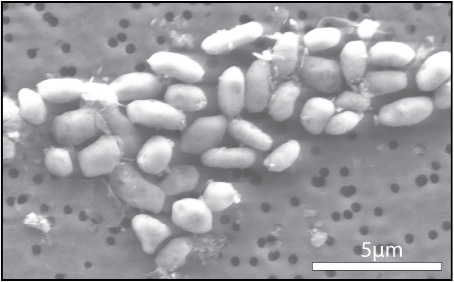
When Nasa called a press conference “to discuss an astrobiology finding that will impact the search for evidence of extraterrestrial life” there was “snowballing speculation” about what they might have found, and calls to Nasa from the White House and Congress.  The Science journal’s embargo didn’t help – paper abstract here. What they’ve found is a bacterium in California’s Mono Lake that, apparently, can use arsenic instead of phosphorus in its DNA.  As the Nasa Astrobiology website notes Up until now, it …

Read more…

“for the promoting of Experimentall Philosophy” – Redux

On Wednesday 28th November 1660 twelve men met at Gresham College in London following a lecture there, and constituted themselves into an association “for the promoting of Experimentall Philosophy”.  Among them was “Mr Boyle”, likely Robert Boyle, son of the first Earl of Cork, born at Lismore Castle, Co. Waterford, on 25 January 1627, and employer, co-experimenter and friend of Robert Hooke. The Royal Society was born – although the first Royal Charter for the Society was not granted until 1662, with a …

Read more…

Fermi Finds Galactic Gamma-ray-emitting Bubbles

Fascinating discovery by Nasa’s Fermi Gamma-ray Space Telescope, which achieved first light in August 2008.  Image credit: NASA’s Goddard Space Flight Center. From the Nasa press release NASA’s Fermi Gamma-ray Space Telescope has unveiled a previously unseen structure centered in the Milky Way. The feature spans 50,000 light-years and may be the remnant of an eruption from a supersized black hole at the center of our galaxy. “What we see are two gamma-ray-emitting bubbles that extend 25,000 light-years north and …

Read more…

“Sleepwalking to a surveillance society.” Anyone awake?

Big Daddy or Big Brother? Where does the balance lie between protecting society and oppressive snooping? The one thing we can be sure of is that technology keeps moving the goal posts and the authorities race to keep up. “We are sleep walking into a surveillance society” said Chris Graham when he took over as Information Commissioner last year. Since then he’s given a new edge to the job, the latest example being a new report into continuing  “ function …

Read more…

“a hot, dense soup of quarks and gluons.”

As the BBC noted, the Large Hadron Collider at Cern has switched from firing beams of protons to beams of heavy [lead] ions.  From the BBC report One of the scientists who will be taking a part in the experiment is David Evans from the University of Birmingham, UK. “Although the tiny fireballs will only exist for a fleeting moment (less than a trillionth of a trillionth of a second) the temperatures will reach over ten trillion degrees, a million times hotter than …

Read more…

Comet Hartley 2 Flyby – “Just spectacular”

Here’s a wondrous short video of the recent flyby of Comet Hartley 2 by the Nasa/JPL EPOXI Mission using 40 images taken from Deep Impact’s Medium-Resolution Instrument during the encounter. Image credit: NASA/JPL-Caltech/UMD/Brown University. And the EPOXI Mission scientists present their preliminary findings at a press conference.  Video via NASAtelevision. Pete Baker