“We are completely compatible with the speed of light that we learn at school”

Jim “I will eat my boxer shorts on live TV” Al-Khalili can probably put the ketchup down now. The somewhat excitable BBC science report notes that the Icarus group at the Gran Sasso underground laboratory in Italy have published the results of a new experiment testing the speed of neutrinos.  And guess what?  They’re not faster-than-light.  [They never were! – Ed]  Indeed.  From the BBC science report The Icarus experiment uses 600 tonnes – 430,000 litres – of liquid argon to detect the …
Read more…

“anthropomorphising the results from flies is difficult to suppress…”

I’m sure there’s no significance at all in the timing of this story…  As the somewhat excitable BBC science report’s headline has it – “Sex-starved fruit flies turn to drink” In an article in Science, researchers suggest that alcohol stimulates the flies’ brains as a “reward” in a similar way to sexual conquest. The work points to a brain chemical called neuropeptide F, which seems to be regulated by the flies’ behaviour. Human brains have a similar chemical, which may react …

Read more…

Tour of the Moon

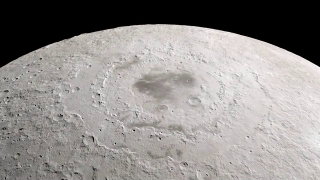
Via NasaExplorer here’s a nice short narrated tour of the Moon, using images from the Lunar Reconnaissance Orbiter, focusing in on some particular sites of interest.  [Video credit: NASA/Goddard Space Flight Center].   Pete Baker

Odyssey Marine surrenders ‘Black Swan’ treasure to Spain

It looks as if the 5 year legal battle between US company Odyssey Marine Exploration and the Spanish government over the ‘Black Swan’ treasure is finally coming to an end.  As I mentioned previously Browsing through the Odyssey Marine press archive brings an update on their previous big find.  Also mentioned in my earlier post  Odyssey is currently being sued by the Spanish government over a previous treasure of “17 tonnes of silver coins plus a few hundred gold coins”, …

Read more…

Faster-than-light neutrinos? Not so fast…

The Telegraph’s Tom Chivers might be a little premature with his “I told you so“, but the reality is that theoretical physicist Jim “I will eat my boxer shorts on live TV” Al-Khalili can probably put the ketchup down. As the historically “somewhat excited” BBC report, “Faster-than-light neutrinos could be down to bad wiring“.  Needless to say, the situation is a little bit more complicated than the BBC headline suggests… As the Guardian report notes Late on Wednesday night, scientists at the Opera …

Read more…

Lake Vostok: “Admit it, it sounds just like a thousand horror-movie setups.”

That was the Professor’s not entirely inaccurate comment this time last year, when a Russian team came up just short in their attempt to reach Lake Vostok – the largest sub-glacial freshwater lake on Earth. The project to drill down to the lake, which covers 16 square kilometres and has been sealed under approximately 3,750m of ice in the Antarctic for around 15 million years, began over 20 years ago. The Russian team returned to the drill site during the recent Antartic summer and, as the …

Read more…

Odyssey Marine to recover Victory, but lose ‘Black Swan’ treasure

Last seen somewhere off the Irish coast, US company Odyssey Marine Exploration have announced that they have “executed an agreement with the Maritime Heritage Foundation for the financing, archaeological survey and excavation, conservation and exhibit of HMS Victory (1744) and artifacts from the shipwreck site.”   That’s Admiral Balchin’s HMS Victory – a 100-gun first-rate ship of the line lost in 1744 in the English Channel. It confirms an earlier report in the Sunday Times.  There may be four tonnes of gold …

Read more…

“Opportunity on Mars – 8 years and counting!”

Nasa’s Mars Exploration Rover Opportunity landed in Eagle Crater on Mars on Jan. 25, 2004, Universal Time, three weeks after its rover twin, Spirit, had landed halfway around the planet.  Opportunity completed its three-month prime mission in April that year, everything else has been bonus, extended missions.  Spirit is no longer with us.  But Opportunity carries on. [Image credit: NASA/JPL-Caltech/Cornell/Arizona State Univ.] This mosaic of images taken in mid-January 2012 shows the windswept vista northward (left) to northeastward (right) from the location …

Read more…

Stargazing, and [exo]planet hunting…

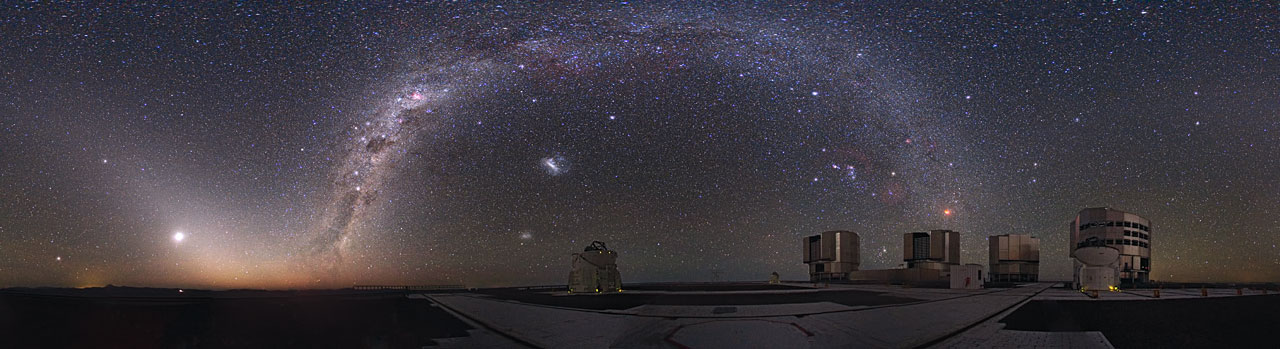
The last three nights saw the return to BBC2 of popular astronomy show Stargazing Live – presented by Brian Cox and Dara O’Briain.  Hopefully it will become, at least, an annual fixture. [Image credit: ESO/Y. Beletsky] The three hour-long programmes are still available, for now, on the iPlayer.  The entertaining ‘after-show’ shows, Back to Earth, appears to be missing are also available. If you’ve been paying attention you’ll have recognised some of the material – for example, the Lunar Reconnaissance Orbiter’s images …

Read more…

Phobos-Grunt: “Re-entry is now imminent”

The BBC’s spaceman, Jonathan Amos, reports on the imminent re-entry of the 13-tonne failed Russian Mars probe, Phobos-Grunt.  Included in that 13-tonnes are more than 10 tonnes of fuel which is expected to explode when the aluminium storage tanks rupture during re-entry.  From the BBC report The Russian space agency says little of the probe will survive to the surface. It calculates no more than 200kg in maybe 20-30 fragments. Precisely where on the Earth’s surface – and when – this …

Read more…

“It’ll be back in about 600 years…”

In this short video ScienceAtNasa takes an informative look at the surprisingly robust sun-grazing Comet Lovejoy. And here’s the stunning video from the crew of the International Space Station again. [Video courtesy of the Image Science & Analysis Laboratory, NASA Johnson Space Center] Pete Baker

The Written World

Here’s something to keep you occupied over the weekend.  [Will there be a quiz? – Ed]  Possibly…  The BBC magazine has an short and interesting, but un-embeddable, audio slide-show of Melvyn Bragg’s Radio 4 five-parter, In Our Time: The Written World.  The British Library has more online information about the texts and technology featured in each of the programmes.  From Chinese oracle bones, the oldest items in the library, to 17th and 18th Century news books, news pamphlets and newspapers.  As …

Read more…

ISS Commander: “the most amazing thing I have ever seen in space”

Having, unexpectedly, survived its solar close encounter, Comet Lovejoy is providing some spectacular views for early morning observers in the southern hemisphere.  Spaceweather has a growing collection of images. But the most spectacular view has to have been the one captured by the crew of the International Space Station (ISS).  Wow!  [Video courtesy of the Image Science & Analysis Laboratory, NASA Johnson Space Center] Usually they make do with stunning views of aurorae…  Here’s ISS Commander Dan Burbank speaking to WDIV-TV …

Read more…

Sleigh Ride over the Red Planet

A short seasonal diversion from JPLnews, using images of the real landscapes of Mars taken by the High Resolution Imaging Science Experiment (HiRISE) camera on NASA’s Mars Reconnaissance Orbiter.   Pete Baker

Comet Lovejoy is still with us!

Rumours of the demise of Kreutz sungrazing Comet Lovejoy may have been greatly exaggarated.  NASA’s Solar Dynamics Observatory caught Comet Lovejoy emerging from its scorching close encounter with the sun.  [Video Credit: NASA SDO] As the Science at Nasa press release notes Comet Lovejoy was discovered on Dec. 2, 2011, by amateur astronomer Terry Lovejoy of Australia.  Researchers quickly realized that the new find was a member of the Kreutz family of sungrazing comets.  Named after the German astronomer Heinrich Kreutz, …

Read more…

LHC: “Evidence soon emerged however that this particular squib might be of the damp variety…”

After the hype, “somewhat excited” reporters are straining to sound convincing – the Guardian live-blogged the presentation.  And Matt Strassler was at the circus in CERN. I have been chatting with my colleagues, all particle physicists working at or visiting CERN, and finding out how many say that the evidence presented today convinces them that the Higgs has been found.  So far — Experimentalists — No: 9,  Maybe: 1, and a good one; will explain shortly.  Yes: 1 (Tomaso Dorigo, of …

Read more…

Kepler-22b: “This is a major milestone on the road to finding Earth’s twin”

By the time its last catalogue of exoplanet candidates was released in February,  Nasa’s Kepler space observatory, launched in March 2009, first light in April 2009, had identified 1,235 planetary candidates – and 54 candidates within the habitable zone. The Kepler team have now identified 2,326 planet candidates – of those, 207 are approximately Earth-size, 680 are super Earth-size, 1,181 are Neptune-size, 203 are Jupiter-size and 55 are larger than Jupiter.  And there are now 48 planet candidates in their star’s habitable zone There …

Read more…

“Maybe Picasso did not paint any pictures at all, at least not the Mona Lisa.”

As the Guardian’s Ian Sample notes from the science desk The runup to Christmas looks exciting for the Large Hadron Collider at Cern near Geneva. Staff at the laboratory have arranged a special seminar on Tuesday 13 December at which the latest results in the search for the Higgs boson will be made public. The presentation is due to happen directly after the lab’s scientific policy committee has convened one of its regular meetings behind closed doors. So what can we …

Read more…

“Look again at that dot.”

As Curiosity heads to Mars, and Voyager continues to go boldly further than ever, the BBC reports on some speculative assessments of potentially habitable locations elsewhere in the galaxy.  A timely reminder, then, from the Guardian’s GrrlScientist of our pale blue dot in this short video tribute to Carl Sagan. Carl Sagan (1934-1996), Pale Blue Dot: A Vision of the Human Future in Space [1997: Amazon UK; Amazon US]. From this distant vantage point, the Earth might not seem of any …

Read more…

Curiosity heads to Mars

Nasa’s Mars Science Laboratory (MSL) successfully launched from the Kennedy Space Centre earlier today on an Atlas 5 rocket at the start of its eight and a half month journey to Mars.  With its massive 900kg rover, Curiosity, it’s being billed as “the biggest and best Mars mission yet.” Mike Meyer is the lead scientist on Nasa’s Mars exploration effort: “MSL plays a central role in a series of missions of looking at Mars and determining whether or not it has the potential for life. …

Read more…