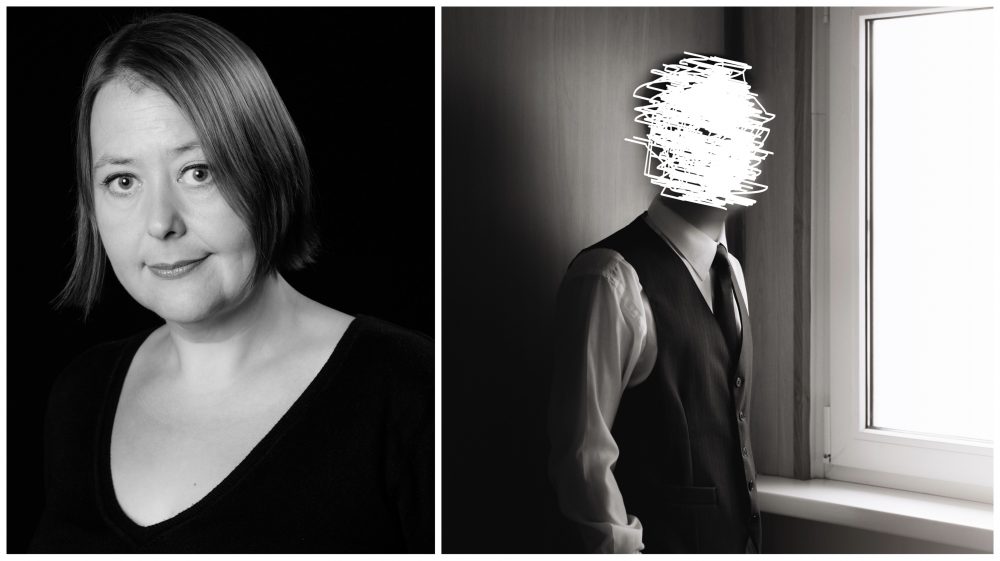
“We can begin with the empowerment of civic society, by bringing about participative and deliberative democracy”

Maureen Hetherington spoke about the need to empower civic society and bring about participative and deliberative democracy in her contribution to a panel on A Shared Home Place – the Unfinished Business of Reconciliation, recorded last week in Derry’s Guildhall and organised by the John & Pat Hume Foundation.

Singing Struggle and Agreement – watch back to hear the GFA in song and a panel as part of Slugger’s contribution to #BIAF20

Register online to watch and listen to ‘Singing Struggle and Agreement’ tonight at 7.30pm as part of Belfast International Arts Festival. Slugger O’Toole has partnered with Spark Opera to stage the NI/ROI première of Clare Salters’ ‘Good Friday Agreement – p E A C E in 4/4 time’ alongside musical of struggle and a panel discussion looking back at the Belfast Agreement negotiations with Mark Devenport, Monica McWilliams and Kate Guelke.

#SluggerTV – The role of the Third Sector #TheReset

David McCann was joined by guests Gráinne Walsh (Stratagem) and Jacinta Linden (SPACE NI) to examine how the third sector sector was the bedrock of our response to the pandemic. Remember all of those charities who stepped up while revenues were falling and did extraordinary things to help the most vulnerable in our society? In this episode, we hear about the resilience of this sector, from making headlines for innovative ideas such as Kindness Kits and new ways of working. can help provide a reset for the local economy and our society in the years ahead and what is needed from local policy-makers to help make it all happen.

#SluggerTV After lockdown, can the arts return to health without a vaccine? (John Hewitt Digital Festival)

A recent article on The Stage magazine website noted that “big tops are being built up across the UK”. “With sidewalls raised and seats spaced out, tented circuses are resuming summer tours. Heavy theatre doors, meanwhile, remain shut. But there’s a simple solution to opening up with socially distanced productions. Theatres should take to tents.” A trip to the cinema this week – I’d recommend Saint Frances out of the poor fare currently being screened – was a lonely affair …

Read more…

John Hewitt Digital Festival of Literature and Ideas 2020

The John Hewitt Society have moved their Armagh summer school online with a series of free online talks and discussions. While we normally take Slugger TV out of the NvTv studio to record in front of the Armagh audience, we’re delighted to be opening this year’s festival with a discussion about “After lockdown, can the arts return to health without a vaccine?”. Read more about this and the rest of the programme …

How much of the extra £33m dividend from UK Culture Secretary will be spent on NI arts? (updated with response from Communities Minister and Arts Council NI)

A major injection of £1.57bn into the cultural sector by the UK Culture Secretary Oliver Dowden may prematurely raise the hopes of Northern Ireland artists that their industry is finally set to receive the relief and attention that many other areas of business have already enjoyed. The question for the NI Executive is how much of the expected £33m (via Barnett consequentials) will be spent on the cultural sector? Northern Ireland already spends less than half what England, Scotland and Wales spend on arts per head of population.

Slugger TV – easing lockdown into what sort of economy + whether Cummings’ trip to Durham has damaged Johnson’s political currency

Tune into NvTv this evening at 20:11 – or watch it here from 20:15 – to catch Episode 39 of Slugger TV. David McCann is joined by commentators Julie-Anne Corr Johnston and Tim Cairns to discuss how Northern Ireland is coming out of lockdown and what sort of economy we will emerge into, as well as the fallout of Dominic Cummings’ trip to Durham on Boris Johnson’s political currency. Edited by Alan Meban.

Slugger TV – the devolved nations fightback episode

This month, in episode 38, Slugger O’Toole’s deputy editor David McCann talks to Irish News journalist Allison Morris and Andersontown News columnist Andrée Murphy about the performance of the Northern Ireland Executive, the legacy of different devolved government strategies to ease the COVID-19 lockdown, and the Irish Government’s lack of cross-border consultation about their plans. Edited by Alan Meban and also broadcast (as a slightly shorter 30 minute edit) on Belfast’s community TV channel NvTv tonight at 20:35.

Breakdown of COVID-19-related deaths in Northern Ireland published for week ending 10 April

Statistics released this morning by NISRA reveal that up until the week ending 10 April there were 157 COVID-19-related deaths in Northern Ireland. 109 people died in hospital (69%); 41 people died in care homes and hospices (26%) across 23 separate establishments; 7 people died at residential addresses (4%). 39 of these deaths which mentioned COVID-19 on their death certificate were not part of previous PHA daily reports of deaths of people with positive tests for COVID-19.

Assembly Speaker taking medical advice to work from home for 12 weeks

Alex Maskey says: “I have received advice from my Health Trust to advise that, due to my cardiac history, I am in the group of those who should stay at home and avoid face to face contact for least twelve weeks. I have therefore written to all Members today to inform them that I will therefore be working from home in the time ahead. “This does not prevent me from conducting the majority of my responsibilities as Speaker – many …

Read more…

Watch: #SluggerTV episode 36 – the one about the RHI report, a beneficent Chancellor, draconian legislation and the NI Executive’s reaction to COVID-19

March’s episode of Slugger TV was broadcast as part of Imagine! Belfast’s virtual festival and is currently showing on community TV channel NvTv. Here’s the video for any of you who missed my conversation with journalist Allison Morris and festival director Pete O’Neill. We discussed the publication of the Renewable Heat Incentive inquiry report [Ed – anyone remember that?], the Chancellor’s beneficent schemes to businesses impacted by COVID-19, the somewhat draconian measures being rapidly legislated into law, and how the …

Read more…

Twelfth of July demonstrations cancelled

Edward Stevenson, the Grand Master of the Grand Orange Lodge of Ireland, has confirmed that the Orange Institution will not hold its annual Twelfth of July demonstrations this year and alternatives ways will be found to mark the occasion. With the parades cancelled, the focus will shift to communities and whether the tradition of Eleventh Night bonfires will continue given the large crowds that are attracted to view them when lit.

Watch: Sam McBride on the RHI Inquiry Report #ImagineBelfast

Watch back my interview with Sam McBride – author of Burned – to candidly discuss his impressions of the Renewable Heat Incentive inquiry’s report – the final part of this year’s unexpectedly free and online Imagine! Belfast Festival of Ideas and Politics. Everything that has been broadcast over the last three days is available to watch back on the Imagine! website.

Day three of #ImagineBelfast’s virtual festival of ideas and politics – finishing at 8pm with an interview with Burned author Sam McBride

Having sold out two nights of Sam McBride in conversation with William Crawley at the close of the planned week of face-to-face events, the virtual Imagine! Belfast Festival of Ideas and Politics broadcast will finish at 8pm this evening with the author of Burned talking about his impressions of the published RHI Inquiry Report. Before that, from 1pm you can watch talks about economic growth and community banking, a reprise of Lord Patten of Barnes’ recent speech in Belfast when he reminisced about his time in Northern Ireland and his reflections on the Patten report into police reform, thoughts on how COVID-19 has challenged the arts sector and may change political culture, as well as comedy from Stand Up, Speak Out and the Democracy Inspector.

Tune into day two of #ImagineBelfast’s online festival between 1pm and 9pm for democracy, fact-checking, commemoration, abomination, music and more

Day two of the virtual Imagine! Belfast Festival of Ideas and Politics will be streaming talks and interviews between 1pm and 9pm. Expect discussion about democracy, a talk by Prof John Barry, an interview with the maker of a behind-the-scenes documentary about Abomination: A DUP Opera, as well as a dip into last year’s festival archive for a session on the ethical commemoration of the Troubles and why fact-checking matters. There are also locally-made short films in the regular Film Devour Showcase slots, and musical entertainment to brighten up the evening from Emer Maguire.  And if you missed the latest episode of Slugger TV yesterday, it’s available to watch again on the Imagine! Belfast website.

Slugger TV – the ‘Events, dear boy, events’ episode #imaginebelfast

In our latest episode, Alan Meban talks to Irish News journalist Allison Morris and Imagine! Festival director Peter O’Neill about the political response to COVID-19. Recorded as part of the unexpectedly online Imagine! Festival of Ideas and Politics. How is the new Northern Ireland Executive have reacted to the predictable (such as the publication of the RHI report) and how is the Executive stepping up to collectively address the totally unpredictable COVID-19 crisis. Is the New Decade, New Approach a sign of hope, or will it become New Enemy, Same Bad Habits?

Chatting to the director of 1984 ahead of Bruiser Theatre’s coproduction with Lyric Theatre (from 18 April to 16 May)

Robert Icke and Duncan Macmillan’s Olivier Award-nominated stage adaptation of the classic novel is coming to the stage of the Lyric Theatre in April. “Fantastic, bold, immersive and very clever” is how Bruiser Theatre Company’s director Lisa May described the script when I sat down to talk with her last week. “This production really shakes you up, it’s not easy viewing,” says May. “I want the audience to feel that discomfort … This adaptation is so clever that it turns the cameras back on us and suggests we are complacent in this, that we should take responsibility for what we put online and how we choose to live our lives.”