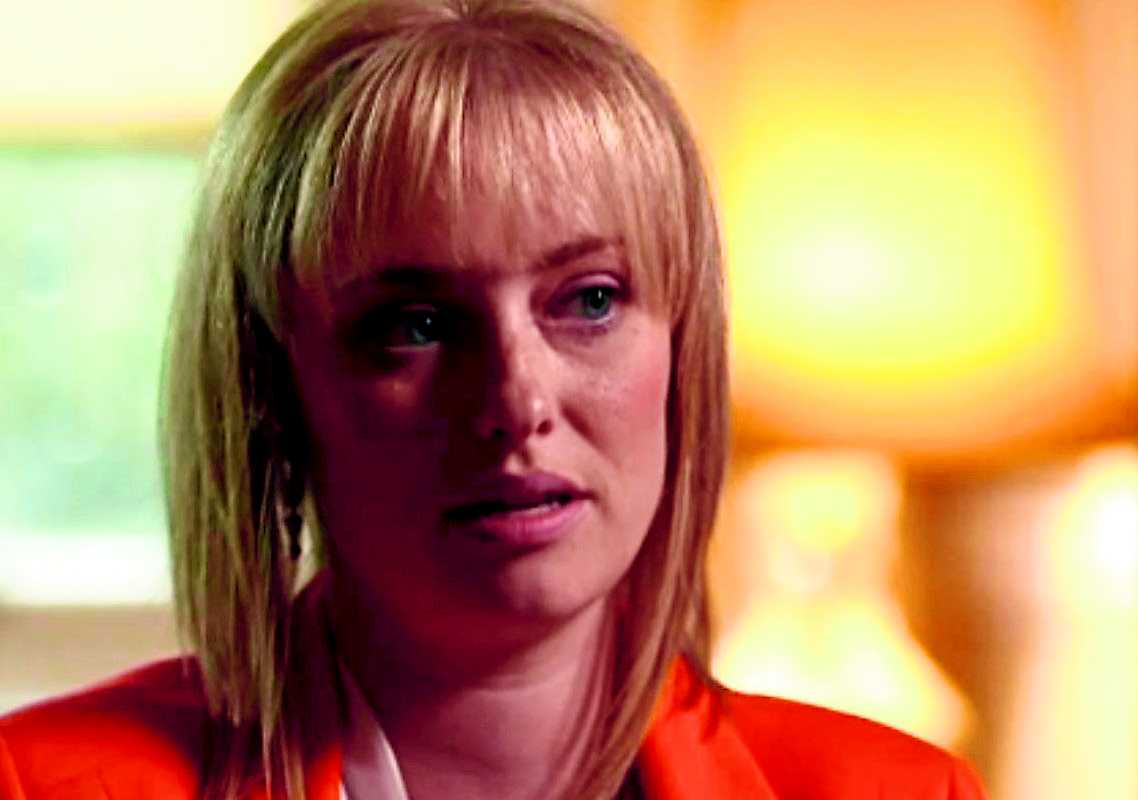
Stephen NOLAN: Enhancing democratic debate in the era of fake news?

Stephen NOLAN: Enhancing democratic debate in the era of fake news? by Allan LEONARD 26 February 2019 As part of their engagement programme, Queen’s University Belfast hosted a lecture by radio and television personality, Stephen Nolan, who was introduced by Ryan Feeney. Much of Nolan’s lecture was an autobiography of how he has developed his career in journalism and working for the BBC. His views on the topics in the lecture title — “Enhancing the Democratic Debate in the Era …
Read more…

Earning trust “story by story”

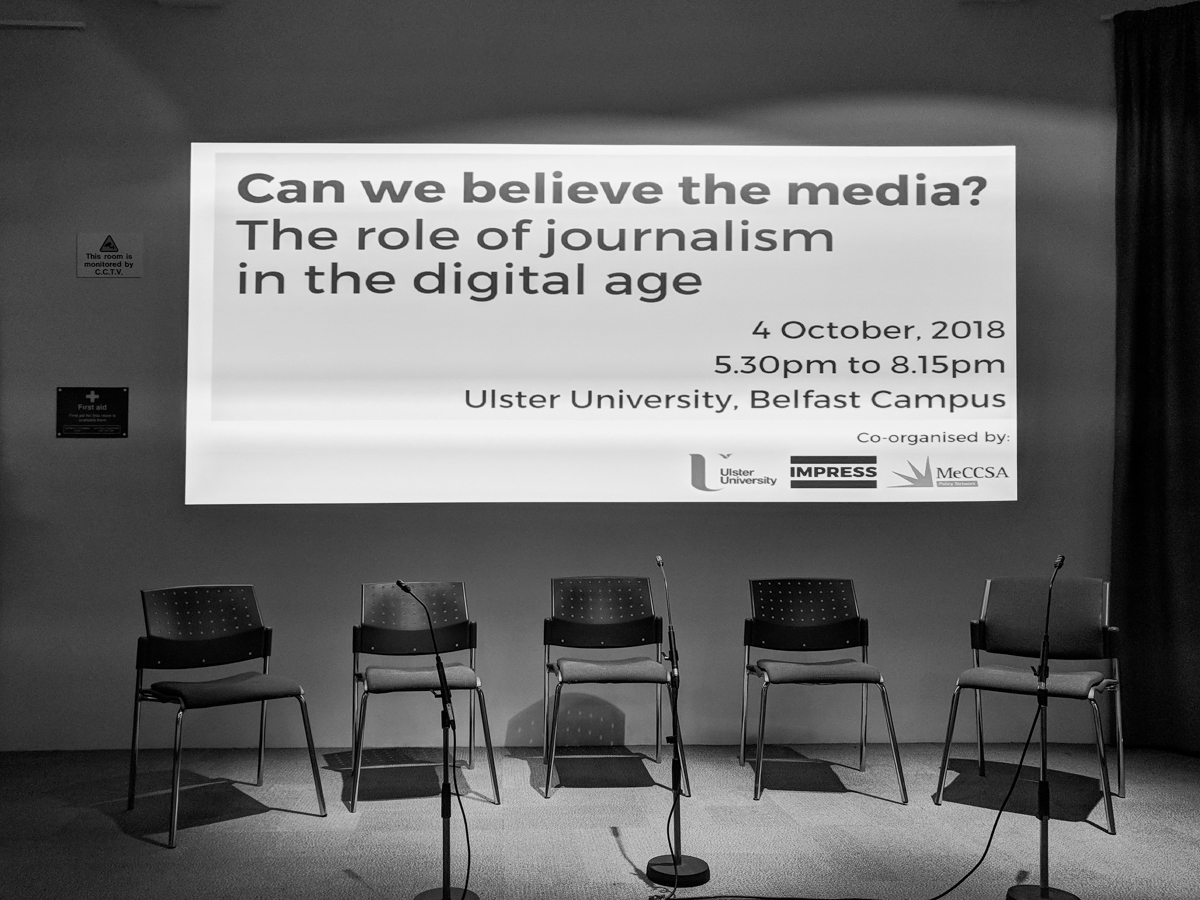
Earning trust “story by story”: Can we believe the media? The role of journalism in the digital age by Allan LEONARD 4 October 2018 Ulster University — along with the UK press regulatory body, Impress, and the Media, Communication and Cultural Studies Association (MeCCSA) — jointly hosted a symposium event at its Belfast campus: “Can we believe the media? The role of journalism in the digital age”. Keynote speakers were Jonathan Heawood (Chief Executive Officer, Impress) and Peter Feeney (Press …

Read more…

The serious business of statistics

When something you hear makes you burst out laughing, you know it’s time to write a blog. In this case, I was listening to “the biggest show in the country” on the subject of Boris Johnson and his peddling of the myth that once Brexit is achieved there will be £350m a week available for the NHS. Indeed, Sir David Norgrove, the Chair of the UK Statistics Authority took the unprecedented step of writing to the foreign secretary to say …

Read more…

Now might be a good time to start a ‘slow journalism’ movement…?

Interesting spat over the media and politics, between Denis Bradley and Stephen Nolan. My own thoughts fall into two parts: one, this is not new nor specific to Northern Ireland; and two, in insisting Nolan carry the can, the abject nature of the general news cycle gets off the hook. Any opportunity to reference John Lloyd’s seminal essay, What the Media Are Doing to Our Politics is a good day. The whole thing is worth reading, but I’ll just quickly crib from …

Read more…

If deception is the real enemy of trust, then it’s getting harder and harder to spot…

Just a quick share dump, with a few links on the new age of digital politics. The relate to the hype about what the internet can do and what it cannot. First, that story about Facebook likes getting used (on an industrial scale) for cleverly segmented marketing: Cambridge Analytica has marketed itself as classifying voters using five personality traits known as OCEAN — Openness, Conscientiousness, Extroversion, Agreeableness, and Neuroticism — the same model used by University of Cambridge researchers for in-house, …

Read more…

“the noise of unsourced chatter, drowning out the signal of fully sourced newsgathering”

Slugger will be 15 years old in June. About two to three years in we found ourselves in a position were we would not infrequently break news, largely because our readers were often just slightly ahead of the more plodding newsrooms of the day. It was never an intentional value, and when Twitter and Facebook algorithms intervened crowdsource breaking news far more quickly and comprehensively than was humanly possible, we never ever tried to compete. Our hidden value has not been …

Read more…

When journalistic confidence marginalises “the more basic and important obligation not to deceive”…

Michael Foley is professor emeritus of journalism at Dublin Institute of Technology (DIT). Writing in the Irish Times he picks up on an interesting angle arising out of Mr Justice Peter Charleton’s opening remarks at the Disclosures Tribunal: At the opening of the Garda whistleblower tribunal, the tribunal chairman Mr Justice Peter Charleton, said he wanted to know if the media was being “used as an instrument for the dissemination of lies”. For most people his remarks are perfectly reasonable, …

Read more…

Does Gregory really think we don’t know they’re ALL trying to game the BBC?

I do wonder what planet Gregory Campbell’s been living on for the last twenty years. Here he is fulminating against the phenomenon of Alliance party planning a false flag operation: “The onus falls on the BBC to do something about this,” said Mr Campbell. “Alliance is being pretty clear here they believe the system is being flouted. Surely the BBC should be working very hard to make sure its programmes don’t become a propaganda tool for any party? “The BBC …

Read more…

Ofcom will regulate the BBC, but who verifies the ‘news’ on Facebook?

Donald Trump becomes US President on Friday amid allegations that fake news stories about his rival Hilliary Clinton helped to sway voters. So it is interesting to note that UK regulator Ofcom is taking on the role of regulating the BBC not any of the new digital media giants. One would have thought that the BBC is well regulated with rigorous editorial guidelines already well- established within the organisation. Perhaps Ofcom should be thinking about regulation of the corporations which …

Read more…

“Maybe it’s time to consider whether there’s something about shrill self-righteousness…”

At the Guardian, Thomas Frank offers some home truths to a self-styled liberal media [including bloggers! – Ed] in the aftermath of Donald Trump’s victory.  From the Guardian Comment is Free article How did the journalists’ crusade fail? The fourth estate came together in an unprecedented professional consensus. They chose insulting the other side over trying to understand what motivated them. They transformed opinion writing into a vehicle for high moral boasting. What could possibly have gone wrong with such …

Read more…

“…no evidence that any other person was involved, so I am sceptical of this political allegation”

Jamie Delargy on UTV last night gave as sharp and precise a precis of where we are with the Nama story thus far. Two points worth highlighting: There is no evidence that that money was then destined for any other person. It was under the control of Ian Coulter, it may have been the case that Mr Coulter intended keeping that money, it may have been the case that he was going to pay other people, but we have no …

Read more…

Quote of the day: Having your future now *and* eating it later?

Just this from John Stewart on the Today Programme on BBC Radio Four this morning when questioned about Hillary Clinton running for the Whitehouse: I don’t think anybody knows who’s going to win. Wait. Do you know? Are you from the future? If so, I would like to bet on some games. What happens with these conversations is that it goes into speculation, and no one knows. [Ah well yes, but we know a man who does – Ed] Do …

Read more…

Do we have a media capable of ‘capturing the conscience of a king’?

The play’s the thing Wherein I’ll catch the conscience of the king.  Hamlet, Act 2, Scene 2 I’ve been waiting for something to emerge from MediaLens on the Oborne resignation. They tend take a rather puritanical view of what’s ailing the corporate media, nevertheless, this passage in particular is well worth sharing I think… The deeper problem, ignored by Jenkins, is that this corporate structure not only trims individual stories, it excludes entire frameworks of understanding. If writing something disagreeable about …

Read more…

After the Telegraph’s revenge on ‘Oborne’s political class…’, what of news’ next frontier?

Ouch! I’m going to file this one under, don’t mess with the corporate politicos. And refer people back to my longer piece on Oborne’s resignation (if you haven’t read it yet, I would recommend it)… The other piece I recommend on the subject of a perceived increase of bought and paid for media is this from Scott Eldridge on The Conversation… You only need to look to the news earlier this year, that The New York Times was adding to its …

Read more…

Peter Oborne, Hannen Swaffer and our ‘surprise’ at how the corporate world works…

So, what to make of the Oborne resignation from the Telegraph? Is it really news that some advertisers exert excessive influence over newspapers? It’s certainly something journalists don’t like to think about, or admit in public. It’s messy to say the least. Much of what he says, I recognise as the decline of newspapers in general. In the two years I worked at the Telegraph whole tranches of staff were starting ‘let go’ with more and more of the desks being …

Read more…

David Carr dies…

Very sad to hear of the death of NYT media hack, David Carr: If you’re gonna get a job that’s a little bit of a caper, that isn’t really a job, that under ideal circumstances you get to at least leave the building and leave your desktop, go out, find people more interesting than you, learn about something, come back and tell other people about it – that should be hard to get into. That should be hard to do. …

Read more…

The Perfect Response to Muslim Generalisations

Reza Aslan was interviewed last year for CNN and was asked what I’m sure the presenters thought were some tough questions. Given the views aired by right wing individuals such as particular members of UKIP, James McConnell and others, perhaps this video might explain why logic-based non muslims have such problems with your reasoning and arguments.   [youtube http://www.youtube.com/watch?v=PzusSqcotDw&w=560&h=315] Kris Nixon (Belfast Barman)Kris tweets ferociously as @belfastbarman and runs an associated site, www.belfastbarman.com where he occasionally opines his views. He …

Read more…

Does #CharlieHebdo offer the rest of us a ‘teachable moment’ on the meaning of free speech?

The terrible events in Paris this week have unleashed, amongst other things, a lot of good journalism, and some pretty decent responses from brother and sister cartoonists. So, here’s a quick round up of some of the best. – In the US the Je suis Charlie motif has been popular but highly moderated by an essentially liberal reponse to the graphicness of the cartoons themselves. David Brooks in the New York Times for instance… …this might be a teachable moment. …

Read more…

“Turns out people know the score, and they’re not so easily offended…”

I’m holding fire (pun intended) on the #CharlieHebdo shootings until I’ve worked out precisely what I think about it. In the meantime, on the business of why humourists may be displacing serious journalism as a prime source in political discourse (and perhaps suffering the consequences), this critique of John Oliver is well worth reading. These three points make worthy highlights: He tells a story. America is built on narrative. Although BuzzFeed has made inroads, it’s got no soul and no true fans, because …

Read more…