Solar Dynamics Observatory: Interacting regions

More stunning footage from the Solar Dynamics Observatory [SDO]. From the SDO video summary Two pairs of active regions observed in extreme ultraviolet light show the dynamic magnetic interplay between them (Aug. 3-4, 2010). Energetic plasma is drawn to the magnetic field lines above active regions and forms the highly structured coronal loops. Connecting lines can also be seen reaching across between for the two widely separated active regions seen in profile to the left. Pete Baker

If all else fails, hit it with a hammer…

Or, as I was tempted to title this post, “Floating in a tin can…”  ANYhoo…  Having eventually fixed the toilet in the US segment, last weekend [31 July] the crew of the International Space Station were forced to reduce power, and suspend scientific experiments, when half their cooling system suddenly shut down. Trouble arose on Saturday night when one of the two ammonia-fed cooling loops shut down, triggering alarms throughout the ISS. The two ammonia lines ensure that all the station’s electronic …

Read more…

ESO’s VLT provides first 3-D image of supernova remnant

As the BBC notes, having already observed the most massive star ever discovered ESO’s Very Large Telescope array [VLT] in Chile has now provided the first 3-D image of a supernova remnant.  The first video is an artist’s impression of the material around recently exploded star, known as Supernova 1987A [SN 1987A]. Credit ESO/L. Calçada. From the ESO press release Unlike the Sun, which will die rather quietly, massive stars arriving at the end of their brief life explode as supernovae, hurling out …

Read more…

2010 Tour de France’s defining moment

Obviously different people have different ideas about what a “decent spectator sport looks like…” But if, like me, you’ve been following this year’s Tour de France you’ll no doubt agree with Steve Wilson’s praise for ITV4’s excellent coverage. It’s been eventful too, and not just for being seven-times Tour winner Lance Armstrong’s final hurrah.  From the prologue in Rotterdam across the cobblestones of Belgium and northern France, and over the punishing peaks of the Pyrénées this year’s course has seen plenty of action. If all goes to …

Read more…

“that damned elusive particle…”

Earlier this week there was unfounded speculation that the Tevatron particle collider at Fermilab had already discovered the Higgs boson.  But if their funding is continued, and it probably will be, they could still take that particular prize ahead of the Large Hadron Collider at Cern. Understandably in the circumstances, all scientific eyes have been on the International Conference on High Energy Physics (ICHEP) in Paris this weekend. The Guardian’s Science Blog’s Jon Butterworth is there In the final session of the …

Read more…

Of giant, and more modest, stars

The discovery of the most massive star ever observed makes the BBC’s, and other’s, headlines.  Identified by astronomers using a combination of new observations on ESO’s Very Large Telescope facility in Chile and data gathered previously with the Hubble Space Telescope, R136a1 has a mass about 265 times that of our own Sun.  Image credits ESO/P. Crowther/C.J. Evans. It’s sited in a cluster known as RMC 136a, in the Large Magellanic Cloud, 165,000 light-years away.  From the BBC report Many objects in the very first population of stars to shine …

Read more…

“One small step for [a] man…”

Last year saw the 40th anniversary of the launch of Apollo 11.  Four days later, on 20th July 1969, Neil Armstrong and Buzz Aldrin walked on the Moon.  And, as the Lunar Reconnaissance Orbiter discovered, the evidence is still there. The BBC have some clips online, including this fascinating interview with Neil Armstrong from The Sky at Night in 1970. And, looking forward, the BBC’s Spaceman blog has a post on a potential compromise over President Obama’s proposed new policy for Nasa, the Nasa …

Read more…

“The eyes of WISE have not blinked since launch”

Nasa marks the completion of the first survey of the entire sky by the Wide-field Infrared Survey Explorer [WISE] with the release of a new image from the survey – a seven square degrees region including the Pleiades cluster.  Image credit: NASA/JPL-Caltech/UCLA. WISE was launched in December last year and saw first light in January.  Here’s a short video medley of previously released images. More images, including this one of Tycho’s supernova remnant, at Nasa’s WISE image gallery.  Image Credit: NASA/JPL-Caltech/UCLA Pete …

Read more…

See beautiful Ontario Lacus!

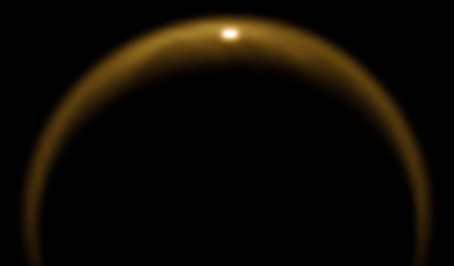
Using radar data from the Cassini spacecraft’s flybys on June 22, 2009, July 8, 2009, and Jan. 12, 2010, Nasa’s Jet Propulsion Laboratory have produced this animated flyover of a potential future holiday destination – the lakes of Titan.  Just don’t forget to pack the thermal underwear…  Video credit: JPL News From the JPL press release Ontario Lacus, the largest lake in the southern hemisphere of Saturn’s moon Titan, turns out to be a perfect exotic vacation spot, provided you can handle the frosty, subzero …

Read more…

It’s Science Friday!

Here’s a short interesting video, with stunning images, on the solar weather under investigation with the help of the Solar Dynamics Observatory. Pete Baker

“it’s a thing of beauty”

Launched in May 2009 ESA’s super-cool Planck observatory achieved first light in September.  Now, as the BBC’s Jonathan Amos notes, ESA have released Planck’s first all-sky image. “This is the moment that Planck was conceived for,” says ESA Director of Science and Robotic Exploration, David Southwood. “We’re not giving the answer. We are opening the door to an Eldorado where scientists can seek the nuggets that will lead to deeper understanding of how our Universe came to be and how it …

Read more…

LRO celebrates one year in orbit

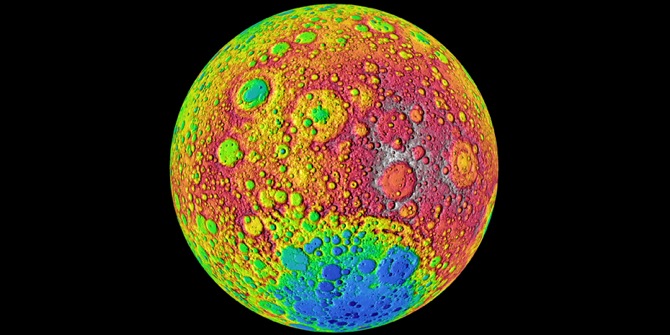
Launched on 18 June 2009, Nasa’s Lunar Reconnaissance Orbiter sent back its first images of the lunar surface shortly afterwards and has just completed its first full year in orbit.  To celebrate Nasa has put together a short video of ten cool things its found – some of which I may have noted at the time. Image credit: Nasa/Goddard/Arizona State University. Video credit: NASA/Goddard. Pete Baker

“We were prepared not to hear anything.”

As the professor says, “Cool”.  The voice of an ailing 82-yera-old Thomas Edison has been resurrected from a 1929 recording. It is contained in one of the world’s oldest surviving radio broadcasts, recorded on an obscure machine that General Electric developed in 1922 and called a pallophotophone — which means “shaking light sound” in Greek. Listening to the elderly Edison lose his place, become confused and nearly weep over the depth of his admiration for Ford more than 80 years after …

Read more…

“on the June 16th in the year of Our Lord 1904…”

It’s Bloomsday!  And not just in Dublin, Ireland, as Frank McNally points out.  The Irish Times archive is now locked up, but the digested read I posted last year is still available.  And this is still an excellent video.  Those of a sensitive disposition are duly warned, again, that James Joyce enjoys the language in all its fecund nuttiness. Adds Via Crooked Timber’s Maria Farrell, here’s an Irish Times article from the weekend on the real people immortalised in Ulysses. Pete Baker

“Asteroids Rock!”

As the BBC notes, Japanese scientists are confident they have successfully retrieved the first samples ever grabbed from the surface of an asteroid, Itokawa, after recovering a capsule from the Hayabusa spacecraft in the Australian outback. The Japanese space agency (Jaxa) says the capsule looks to be intact. The return was the culmination of a remarkable seven-year adventure, which saw Hayabusa visit asteroid Itokawa in 2005 and attempt to pluck dust from its surface before firing its engines for home. The …

Read more…

More telescopes…

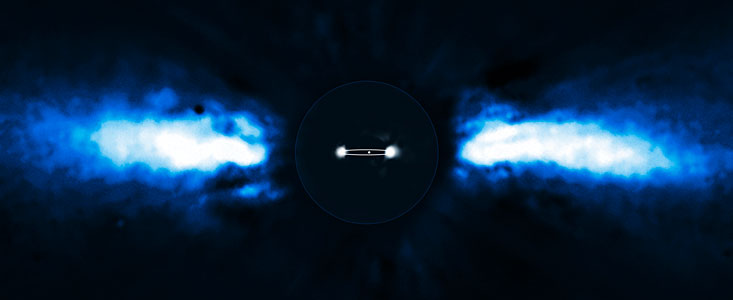
As the BBC notes, for the first time astronomers have directly observed the orbit of an exo-planet – Beta Pictoris b, a gas giant about nine times the mass of Jupiter, some 60 light-years from Earth, in the constellation of Pictar.  The team used the European Southern Observatory’s Very Large Telescope (VLT) in Chile. [Image credit: ESO] Only 12 million years old, or less than three-thousandths of the age of the Sun, Beta Pictoris is 75% more massive than our parent …

Read more…

Listening to Van Morrison

There’s a great piece in today’s Guardian Books section, Greil Marcus on his new book Listening to Van Morrison.  Here’s an extract from the article It’s a short book, not a biography or a career survey, but an attempt to follow those moments in Morrison’s music, as he’s made it from his first records with Them, from Belfast in 1965 to the present day, when something happens that breaks through the boundaries of ordinary communication, of ordinary art speech. In this …

Read more…

Video of the boarding of the Marmara…

Via John McGuirk, a video of what happened when the Israelis sent their soldiers in, one by one,  to board the Turkish ship Marmara armed with paint guns and pistols. Mick FealtyMick is founding editor of Slugger. He has written papers on the impacts of the Internet on politics and the wider media and is a regular guest and speaking events across Ireland, the UK and Europe. Twitter: @MickFealty

Dennis Hopper 1936-2010

Actor, film-maker, photographer and artist, Dennis Hopper has died at the age of 74.  There’s a good obituary at the BBC site, and the Guardian has, or had, a selection of clips from a long career in films which began with a minor role alongside James Dean in Rebel Without a Cause [1955].  Image credit: Dennis Hopper photographed in June 2008 by Antje Verena. The Guardian’s Film section also has an uncredited Peter Bradshaw’s assessment of the film roles of “Hollywood’s Uneasy Rider” …

Read more…