
I broadly agree with Tom Kelly’s assessment (£) of the Executive’s performance during Covid, which is that it has broadly been good, but has at times suffered from the lack of a unified message. Tom argues that the science should be listened to…
…professionals like Dr McBride and Professor Young have to provide advice based on the science as this unpredictable virus reveals itself. After much deliberation they presented their considered view that the wearing of face-coverings should be mandatory. Robin Swann, the health minister agreed.
The executive should have supported the view of the health minister but, more importantly, the experts. The public are rightly confused. In this Trumpian and post-Brexit era experts have been traduced, blackened, maligned and disparaged. And yet faced with a pandemic we have never been in greater need of expert opinion or advice.
The problem thrown up by Black Swan events like Covid, is that never having dealt with something countries like the UK and the Republic found themselves radically unprepared. Smaller and more agile Ireland rose to the challenge more quickly.
In fact, as Ian Parsley said in Cargo Of Bricks Episode One, the UK’s scientific preparations might actually have hindered a more effective response by assuming Covid would behave exactly like flu. Germany’s efforts went into research testing from the get go.
The relatively poor (but not Trump-disastrous) UK response to the crisis surprised long term observers, including Jonathan Portas (from about 8.10 in) and Matthew Taylor of the RSA and host of Bridges to the Future podcast…
Jonathan Portas: We largely ignored the experience of other countries, we were arrogant and insular. I’m not pointing fingers at individuals or even politicians, I think this is a criticism of the British political and policy making class as a whole.
Matthew Taylor: So in your diagnosis of why Britain doesn’t seem to have coped very well with the crisis, certainly in the early stages, what is the balance? Where, on the one hand is the medium term effect of austerity which is reducing the capacity of the government to deal with something like this, and to what extent is it to do with contingent factors to do with the political leadership that we had? And also, let’s be clear, the scientific advice because it is not true to say that the scientists where saying we should have locked down earlier. Some were, but actually the establishment scientists were with the politicians pretty much up to the point at which we changed our policy saying full lockdown wasn’t necessary.
JP: I think that’s right. I’m not sure I would attach that much blame to the particular set of politicians that we have in charge at the moment, as opposed to these structural factors. So I think at the moment, certainly the hollowing out of the state, thanks to austerity and reduction in the capacity of social care and local authorities, etc. But I think you’re right, the fact that we locked down too late, is not something that you can attribute to Boris Johnson or a few people around him. Obviously, politically they are accountable, and they should be but I think that was a system failure and it does attach to civil servants and scientists at least as much as it attaches to them.
MT: So when we look around the world to which countries coped best, I had an eye opening conversation with Audrey Tang who’s the Minister for Technology and more broadly for strategy in Taiwan, it seems to me that amongst the key ingredients are these three:
- the first is that governments are competent, that they have the capacity and in a certain sense the self confidence to be able to respond to this. I think actually a part of that is they have been through a process of responding to the risk of a pandemic before;
- the second element is trust between citizens and leaders. And, in part, there’s been something that’s happened in the last few years which has led to a kind of push back against forms of authoritarian or paternalistic government, that there are movements that have forced governments to be more responsive to citizens
- and then the third element seems to be reasonably devolved systems so that it is possible for lower levels of government to act and co-ordinate quickly.
If you’d known from the outset that those were the three criteria for success you could probably have predicted that Britain probably wasn’t going to do that well, wouldn’t you?
In the case of Northern Ireland is hard to argue that the first two were present before the pandemic, but the third certainly was [luckily, because Sinn Fein had just called off its boycott in the nick of time – Ed]. Local control over public health barely exists in England.
Set up under the “distracting and damaging” Health and Social Care Act, Public Health England is responsible only to the Secretary of State. Treasury promises to ring-fence NHS budgets were reneged on, resulting in a 40% cut in PHA budget since 2013.
As the FT reports a combination of those cuts and the near pathological drive towards centralised control has had damaging implications for an England facing the threat of Covid 19:
Kate Ardern, director of public health for Wigan who is in charge of the emergency response for Greater Manchester, said: “At the point at which it was stopped, there were 290 contact tracers in PHE for the whole of England. Now, that was clearly going to be insufficient but nobody at a national level seemed to have thought, ‘well, that’s not going to be enough, we’ll need more, where are there likely to be more contact tracers?’”
By contrast, even the limited powers devolved to the Welsh Government meant that during lockdown police could enforce rules made in Cardiff, which resulted in several cases of travellers from England being sent home for undertaking non essential travel.
Even the robust debates on Nolan, which have centred on local control and the consensus or lack of it within the Northern Irish Executive have taken place in the context of relative success (or the extreme luck that Belfast is not a major trading centre).
Within weeks, Slugger understands that many of the nursing staff on the testing station outside Altnagelvin were fairly quickly redeployed to duties back inside the hospital because they weren’t being used.
Science can help inform public policy but it is also dependent on the quality of the inputs available and capacity to gather data and, in the context of a global pandemic, a clear willingness to learn from others.
The most recent controversies show its limitations. The issue of mask wearing perplexes some at a point when the virus is probably at its least infectious since its onset. And it wasn’t part of the recommended mix at the start from WHO.
But as a prevention against a second wave it probably makes sense to have it in the public armoury before autumn when the direct threat is most likely to return. And if it acts as reassurance to those currently shielding to come out and resume some of their old lives.
What the science cannot yet do is measure the effects social isolation has had on all of us. Children, who have been deprived of the company of friends, and of older people who’s loss of fitness have perhaps made them more vulnerable to falls.
Too rigid a use of cold data too produces odd and almost inexplicable policy decisions (like the Republic’s exclusion of Denmark from its Green list of countries deemed fit to travel to and return from, when in fact it is one of the ‘cleanest’ countries in Europe).
So, if I’m wearing a mask, its not because government tells me, or that I fear infection (the risk is almost unfeasibly low just now), but because I am keen to signal to others that it is safe to come back out to play, work or just get their hair cut along with the rest of us.
And because I feel the same personal responsibility to my fellow citizens that broadly allowed us to get through the worst of the crisis in March and April. That’s a part of the mix in trusting government advice, as opposed to just following dumb instructions.
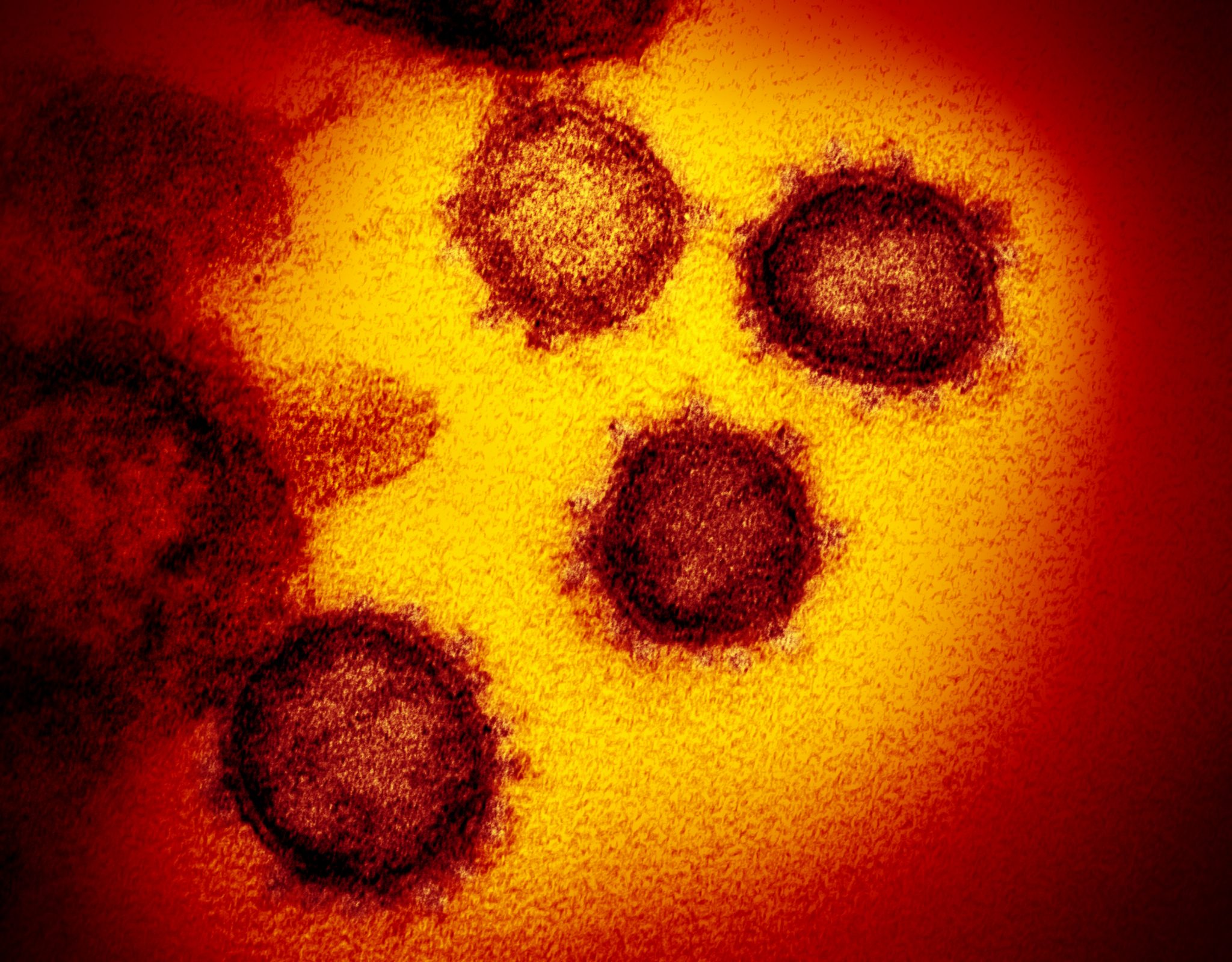
“Novel Coronavirus SARS-CoV-2” by NIAID is licensed under CC BY

Mick is founding editor of Slugger. He has written papers on the impacts of the Internet on politics and the wider media and is a regular guest and speaking events across Ireland, the UK and Europe. Twitter: @MickFealty
Discover more from Slugger O'Toole
Subscribe to get the latest posts sent to your email.


