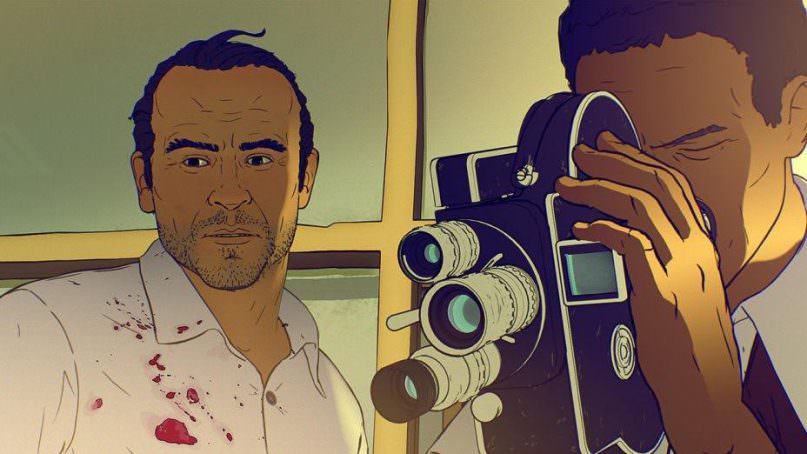
 The Polish Press Agency’s only foreign reporter travelled to an anarchic Angola to establish the facts about the civil war that broke out in 1975 immediately after the country’s independence and the end of colonial rule by Portugal. Angola was trapped in a minor Cold War power play that would kill half a million people and display another million.
Based on Ryszard Kapuściński’s eponymous book, Another Day of Life (available on DVD) animates his conversations with a local journalist, and MPLA militia (People’s Movement for the Liberation of Angola), cutting in some recently filmed recollections from those figures and modern footage of key locations.
When he witnesses South African forces invading southern Angola with tanks and helicopters, Kapuściński’s knows he must act as he is the only overseas journalist with a chance to get the message out. But when he finds out that Cuba will intervene without waiting for Russian approval he is warned that the CIA will intercept his Telex message and escalate the conflict.
While different forms of ‘peace journalism’ or ‘conflict sensitive journalism’ are debated, delaying the specific detail of Cuba’s decision raised ethical questions about a journalist’s responsibility to quickly tell the objective truth, and a human being’s responsibility to save lives and prevent setting up a feedback loop to the best-funded factions in the war.
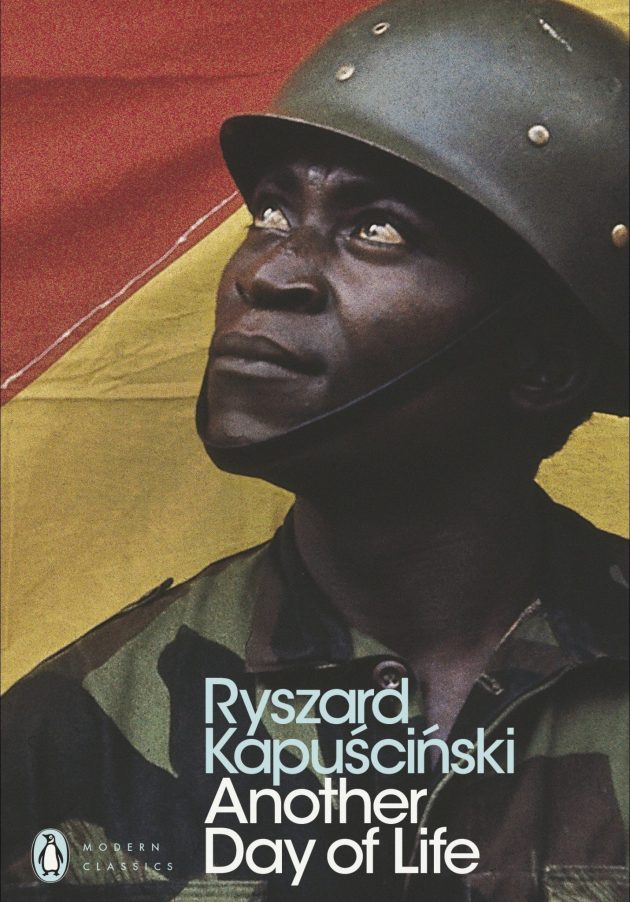 While shrinking a 176 page book down to a 85-minute movie means that only a fraction of the stories and nuances can be conveyed, the story of Angola’s civil war turning into an international conflict which would last until 2002 is one that had until now had passed me by.
Another Day of Life is a superb and distinctive documentary by directors Raúl de la Fuente and Damian Nenow. The characters singled out for inclusion are vivid. The animated storytelling is vibrant and effective. The ethical dilemma is well articulated. The chaos and disorientation – confusão – so often spoke about in the screenplay is shocking and tragic. The film’s inclusion in the festival well justified.
Belfast Film Festival continues until 20 April. Elsewhere, I’ve highlighted some of my picks of Belfast Film Festival which squeezes 90 features and 80 shorts into ten days, ending on 20 April.

Alan Meban. Tweets as @alaninbelfast. Blogs about cinema and theatre over at Alan in Belfast. A freelancer who writes about, reports from, live-tweets and live-streams civic, academic and political events and conferences. He delivers social media training/coaching; produces podcasts and radio programmes; is a FactCheckNI director; a member of Ofcom’s Advisory Committee for Northern Ireland; and a member of the Corrymeela Community.
Discover more from Slugger O'Toole
Subscribe to get the latest posts sent to your email.