Harrowing, restrained interview on @BBCgmu with widow of Patsy Gillespie, turned into an involuntary suicide bomber by McGuinness's IRA men
— Sam McBride (@SJAMcBride) March 22, 2017
As one good friend noted on Facebook this evening “there are folk struggling with loss tonight and others struggling with having the memory of their loss being stirred up” in Northern Ireland, in London and in other parts of the world.
This interview from Good Morning Ulster is just one of many with victims of IRA violence over the last day or two, and probably as Sam McBride noted on Twitter above, by dint of its grace and restraint one of the most powerful.
As it happens, the Gillespie killing was also part of this somber recollection from Mark Devenport:
On one level I was strolling with an engaging companion, devoted to his dog, talking in an animated way about his children and grandchildren.
On the other, whilst he pointed down to the places where he went fishing, I thought back to what had also happened in the countryside before us.
The misty cloud obscured part of the view, but not far down there was Coshquin, the place where the army used to have a permanent checkpoint.
A quarter of a century earlier, the IRA sent army chef Patsy Gillespie to his death at Coshquin, holding his family hostage while he was forced to drive the car bomb which killed him and five soldiers.
The deputy first minister and I took shelter from the wind inside the hill fort, walking in a series of circles for the benefit of my cameraman. Amid the cold stone, my thoughts became more sombre.
It was a matter of record that my companion was a senior IRA commander, so I asked him: “Are there secrets, that you will take to your grave?”
Not surprisingly he didn’t see this as a moment for any personal confessions. Instead, he talked about the unfinished efforts underway to try to create new bodies which might enable victims of Northern Ireland’s troubles to find the truth.
It is important to acknowledge the full breadth of Martin McGuinness’s journey, from its beginnings to its highly positive end. We should, as Bryan Delaney says, be vigilant about the stories we tell about ourselves. And McGuinness’s is critical to understanding the depth of NI’s transformation.
But as we noted in A Long Peace in 2003…
John Dunlop warns us, ‘It would be callous for a community to travel into the future and leave grieving people behind.’ The greatest tribute to those who have suffered, however, is to build on their sacrifices.
…the world’s attention is moving on and the mundane work of reconstruction must begin. This is not about grandiose gestures, nor sudden cures. It is both more modest and more patient.
Despite important progress, we’re still largely waiting for that reconstruction to begin.
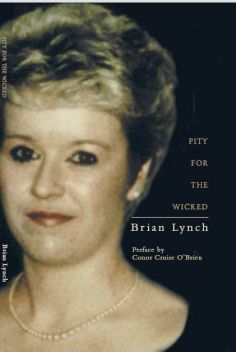
I’ll finish by quoting from one of the most powerfully sustained pieces of poetry from the Troubles and post-Troubles era Pity For The Wicked, by Brian Lynch.
The final stanzas speak for themselves:
She didn’t answer, and yet I heard.
I heard the way that thunder hears itself.
And then I saw the tear that stood within
Her eye grow huge, embreast itself the way
That water does, and with a tearing sound –
The movement was the only noise it made –
Detach itself and fall. A falling star
In miniature, a meteor of dew
And yet the size of sky, it filled the room
With liquid light and washed the window clean
For pity’s sake, with angry emphasis,
And all its other milder synonyms:
For empathy, compassion, clemency,
For tenderness and mercy, sympathy
For sorrow and regret and charity,
And all those words applied to proper names:
For Bloody Sunday, Aldershot, for Pat
Gillespie and his wife, for Margaret Wright,
For everyone who dies and doesn’t know
The reason why, except its not for love.
She said: ‘If not for that for what?
What else is there to give the dead?’
In lieu of answers that was all she had:
An interrogative. But then she added this:
‘There’s nothing else except
That altogether useless thing,
That surplus to requirements,
Suffering in silence’.
And so I woke. And for a moment, lost
To time, I thought I saw the world again,
The world before the Fall, before we crossed
The border line of hate. She vanished then.

Mick is founding editor of Slugger. He has written papers on the impacts of the Internet on politics and the wider media and is a regular guest and speaking events across Ireland, the UK and Europe. Twitter: @MickFealty
Discover more from Slugger O'Toole
Subscribe to get the latest posts sent to your email.