Transit of Venus 2012: The Movie

Were your skies not favourable for viewing?  Did you miss the live online coverage of the last transit of Venus until 2117?  Well, there’s a Flickr group.  Or you could take in the stunning views from Nasa’s Solar Dynamics Observatory.  Video from NasaExplorer.  [Credit: Data courtesy of NASA/SDO, HMI, and AIA science teams].  Enjoy! On June 5 2012, SDO collected images of the rarest predictable solar event–the transit of Venus across the face of the sun.  This event happens in …
Read more…

Transit of Venus 2012: “marvel at the solar system in motion”

As I mentioned back in March, tonight one of the rarest predictable astronomical events will occur – a transit of Venus.  [I’m washing my hair! – Ed]  What hair?  ANYhoo… Since the invention of the greatest human innovation, the telescope, at the beginning of the 17th century, not by Galileo, there have been only 7 such transits.  The next time it will happen will be on 11 December 2117.  Nasa’s Sun-Earth Day website will be providing a live web cast during the more than …

Read more…

“Vesta is special”

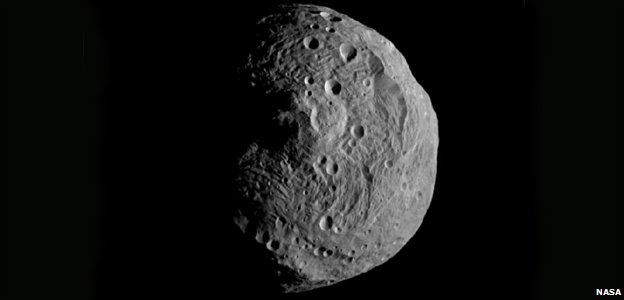
Having arrived at the 530km-wide giant asteroid Vesta in July last year, Nasa’s Dawn Mission scientists have published some of their findings in Science magazine.  As the BBC’s spaceman, Jonathan Amos, notes They confirm that Vesta has a layered interior with a metal-rich core, just as Earth, Mars, Venus and Mercury do. Using information about the shape of the asteroid and its gravity field, scientists can even say something about the likely size of this core. The Dawn team calculates …

Read more…

SDO: Year 2, approaching solar maximum…

Here’s a short video compilation of some stunning views of the Sun in 2012 – as seen by the Solar Dynamics Observatory (SDO). And Science at Nasa has a, erm, cheerful message as we approach solar maximum – “Enjoy the show!”  [Once more, with feeling… – Ed]  Indeed. Pete Baker

“awe, curiosity, wonder, joy, amazement”

After a brief scientific explanation of the phenomena, this video from LittleSDOHMI delivers some wondrous recent views (March 3, 4 and 10) of the Aurora Australis from the International Space Station.  With music! [Video credit: NASA ISS/JSC/ Science@NASA] And here are those stunning clips by themselves. [All videos courtesy of the Image Science & Analysis Laboratory, NASA Johnson Space Center (http://eol.jsc.nasa.gov/Videos/CrewEarthObservationsVideos/)] From Kenya to the Aurora Australis This video was taken by the crew of Expedition 30 on board the International …

Read more…

“…and marvel at the solar system in motion”

Here’s a date to mark in your diary [really? – Ed].  On the 5/6 June this year one of the rarest predictable astronomical events will occur – a transit of Venus.  [Can’t wait… – Ed]  Since the invention of the greatest human innovation, the telescope, at the beginning of the 17th century, not by Galileo, there have been only 7 such transits.  And, although the last one was in 2004, the next will not happen until 11 December 2117. [I’ll catch it then! …

Read more…

The Serpent Dust Devil of Mars

  [We’re not in Kansas anymore! – Ed]  Indeed.  Here’s a great little video from JPLNews on the 800m-tall dust devil they spotted on Mars in this wondrous image acquired, on Feb 16 2012, by the High Resolution Imaging Science Experiment (HiRISE) camera on NASA’s Mars Reconnaissance Orbiter. [Image Credit: NASA/JPL-Caltech/Univ. of Arizona] Pete Baker

Tour of the Moon

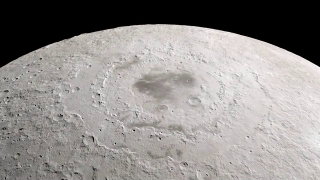
Via NasaExplorer here’s a nice short narrated tour of the Moon, using images from the Lunar Reconnaissance Orbiter, focusing in on some particular sites of interest.  [Video credit: NASA/Goddard Space Flight Center].   Pete Baker

“Opportunity on Mars – 8 years and counting!”

Nasa’s Mars Exploration Rover Opportunity landed in Eagle Crater on Mars on Jan. 25, 2004, Universal Time, three weeks after its rover twin, Spirit, had landed halfway around the planet.  Opportunity completed its three-month prime mission in April that year, everything else has been bonus, extended missions.  Spirit is no longer with us.  But Opportunity carries on. [Image credit: NASA/JPL-Caltech/Cornell/Arizona State Univ.] This mosaic of images taken in mid-January 2012 shows the windswept vista northward (left) to northeastward (right) from the location …

Read more…

Phobos-Grunt: “Re-entry is now imminent”

The BBC’s spaceman, Jonathan Amos, reports on the imminent re-entry of the 13-tonne failed Russian Mars probe, Phobos-Grunt.  Included in that 13-tonnes are more than 10 tonnes of fuel which is expected to explode when the aluminium storage tanks rupture during re-entry.  From the BBC report The Russian space agency says little of the probe will survive to the surface. It calculates no more than 200kg in maybe 20-30 fragments. Precisely where on the Earth’s surface – and when – this …

Read more…

“It’ll be back in about 600 years…”

In this short video ScienceAtNasa takes an informative look at the surprisingly robust sun-grazing Comet Lovejoy. And here’s the stunning video from the crew of the International Space Station again. [Video courtesy of the Image Science & Analysis Laboratory, NASA Johnson Space Center] Pete Baker

ISS Commander: “the most amazing thing I have ever seen in space”

Having, unexpectedly, survived its solar close encounter, Comet Lovejoy is providing some spectacular views for early morning observers in the southern hemisphere.  Spaceweather has a growing collection of images. But the most spectacular view has to have been the one captured by the crew of the International Space Station (ISS).  Wow!  [Video courtesy of the Image Science & Analysis Laboratory, NASA Johnson Space Center] Usually they make do with stunning views of aurorae…  Here’s ISS Commander Dan Burbank speaking to WDIV-TV …

Read more…

Sleigh Ride over the Red Planet

A short seasonal diversion from JPLnews, using images of the real landscapes of Mars taken by the High Resolution Imaging Science Experiment (HiRISE) camera on NASA’s Mars Reconnaissance Orbiter.   Pete Baker

Comet Lovejoy is still with us!

Rumours of the demise of Kreutz sungrazing Comet Lovejoy may have been greatly exaggarated.  NASA’s Solar Dynamics Observatory caught Comet Lovejoy emerging from its scorching close encounter with the sun.  [Video Credit: NASA SDO] As the Science at Nasa press release notes Comet Lovejoy was discovered on Dec. 2, 2011, by amateur astronomer Terry Lovejoy of Australia.  Researchers quickly realized that the new find was a member of the Kreutz family of sungrazing comets.  Named after the German astronomer Heinrich Kreutz, …

Read more…

“Look again at that dot.”

As Curiosity heads to Mars, and Voyager continues to go boldly further than ever, the BBC reports on some speculative assessments of potentially habitable locations elsewhere in the galaxy.  A timely reminder, then, from the Guardian’s GrrlScientist of our pale blue dot in this short video tribute to Carl Sagan. Carl Sagan (1934-1996), Pale Blue Dot: A Vision of the Human Future in Space [1997: Amazon UK; Amazon US]. From this distant vantage point, the Earth might not seem of any …

Read more…

Curiosity heads to Mars

Nasa’s Mars Science Laboratory (MSL) successfully launched from the Kennedy Space Centre earlier today on an Atlas 5 rocket at the start of its eight and a half month journey to Mars.  With its massive 900kg rover, Curiosity, it’s being billed as “the biggest and best Mars mission yet.” Mike Meyer is the lead scientist on Nasa’s Mars exploration effort: “MSL plays a central role in a series of missions of looking at Mars and determining whether or not it has the potential for life. …

Read more…

Chaos on Europa

And that could be a good thing. [Image credit: Nasa/JPL. Image reprocessed by Ted Stryk].  As a BBC report notes, Nasa scientists have published their latest thinking on the chaos terrains of Jovian satellite Europa. [All hail our friend and lord, Jupiter! – Ed] *ahem*.  It suggests that the “chaos terrains form above liquid water lenses perched within the ice shell as shallow as 3 kilometres”.  Here’s a cross-section view through the surface of Europa showing the suspected “Great Lake.”  [Image credit: Britney Schmidt/Dead Pixel …

Read more…

“An aircraft carrier-sized asteroid will make a safe, close flyby of Earth…”

If the calculations are correct, the 400m-wide asteroid 2005 YU55 will make a safe, close flyby of Earth at around half past eleven tonight (11.28pm GMT).  [If?! – Ed]  If not, we’ll have a wondrous new scar to boast about!  Radar image of asteroid 2005 YU55 obtained on Nov. 7, 2011, at 11:45 a.m. PST (2:45 p.m. EST/1945 UTC), when the asteroid was at 3.6 lunar distances, which is about 860,000 miles, or 1.38 million kilometers, from Earth. [Image credit: NASA/JPL-Caltech] And with its …

Read more…

Wow, indeed.

Via Tom Chivers at the Telegraph blog. [Video courtesy of the Image Science & Analysis Laboratory, NASA Johnson Space Center] This video was taken by the crew of Expedition 29 on board the International Space Station. The sequence of shots was taken October 18, 2011 from 07:09:06 to 07:27:42 GMT, on a pass from just south of Alaska to eastern Cuba. The camera used for this imagery was north-facing, so the Aurora Borealis stay visible throughout the video. Lights from …

Read more…

“humanity’s first overland expedition on another planet..” – redux

[Image credit: NASA/JPL-Caltech/University of Arizona/Texas A&M University.]  Having completed what once “seemed like a crazy idea”, Nasa have released a video documenting the journey of Mars Exploration Rover Opportunity from Victoria crater to Endeavour crater.  A “three-year trek that totaled about 13 miles (21 kilometers) across a Martian plain pocked with smaller craters.”  Opportunity arrived on Mars in January 2004 and completed its three-month prime mission in April that year.  The rest have been bonus, extended missions.   The video is compiled from 309 images taken at …

Read more…