Mind your heads…

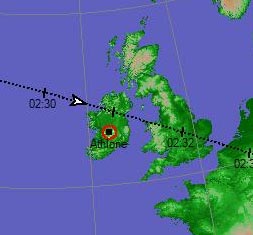
I did warn you…  Just about everyone’s now covering the falling UARS satellite – that’s the 5 tonne, 20-year-old UARS satellite.  Nasa has further refined their estimate of when it will come down. As of 10:30 a.m. EDT on Sept. 23, 2011, the orbit of UARS was 100 miles by 105 miles (160 km by 170 km). Re-entry is expected late Friday, Sept. 23, or early Saturday, Sept. 24, Eastern Daylight Time.  Solar activity is no longer the major factor …

Read more…

Aurora Australis, from space

As noted by the BBC, Nasa have released a short video of the Aurora Australis “created from a sequence of still shots taken by astronauts on board the International Space Station. The images were acquired on September 11, 2011 as the ISS orbit pass descended over eastern Australia.”  Wondrous. Pete Baker

Of proto- [and exo-] planets. And falling satellites…

Nasa’s Dawn spacecraft remains in orbit around the 530km-wide proto-planet Vesta – the second most massive object in the main asteroid belt.  And they’ve released this cool video constructed from the images they’ve obtained so far. Via JPLnews Here’s an image of the south pole of Vesta from a distance of about 1,700 miles (2,700 kilometers). [Image credit: NASA/JPL-Caltech/UCLA/MPS/DLR/IDA] And speaking of exo-planets, scientists using the orbiting Kepler observatory have identifed the first circumbinary planet, the first planet known to definitively orbit two …

Read more…

“the scheme was poorly planned, badly managed and did not provide good value for money”

We’ve already seen the Northern Ireland Audit Office report criticising the NI Department of Agriculture’s handling of the Farm Nutrient Management Scheme – the largest capital grant scheme ever run by the Department of Agriculture, through which some 4000 farmers received grants worth £121million.  Now the BBC have reported that a draft report from the NI Assembly’s Public Accounts Committee, due to be published in 3 weeks time, will be equally damning.  From the BBC report It is expected to conclude that …

Read more…

“Currently the number of exoplanets stands at close to 600…”

[Image credit: ESO/M. Kornmesser].  As the BBC reported, astronomers using the HARPS spectrograph on the 3.6-metre telescope at the European Southern Observatory [ESO]’s La Silla Observatory in Chile recently announced the discovery of more than 50 new exoplanets orbiting nearby stars, including sixteen super-Earths.  It’s the subject of ESOcast 35: 50 New Exoplanets. From the ESO science release In the eight years since it started surveying stars like the Sun using the radial velocity technique HARPS has been used to discover more …

Read more…

Royal Observatory Astronomy Photographer of the Year

The Royal Observatory Greenwich has announced the winners of the Astronomy Photographer of the Year 2011 – and they have a free exhibition of the winning shots.  Personally my favourites are among the Deep Space category  [There’s a surprise… – Ed].  All the entries can be viewed on the Flickr Astrophoto group.  And it’s worth taking the time [6min 17sec] to watch the, unfortunately unembeddable, BBC audio slideshow of some of the winning images.  Wondrous. Pete Baker

Friday thread: “Setting ourselves up for environmental failure”

Alex Steffen: Our economy operates by stealing the future, selling it in the present, and calling it GDP. Towards a sustainable environmental future, and the problem with simple answers. Mick FealtyMick is founding editor of Slugger. He has written papers on the impacts of the Internet on politics and the wider media and is a regular guest and speaking events across Ireland, the UK and Europe. Twitter: @MickFealty

“a special perspective of our role and place in the universe…”

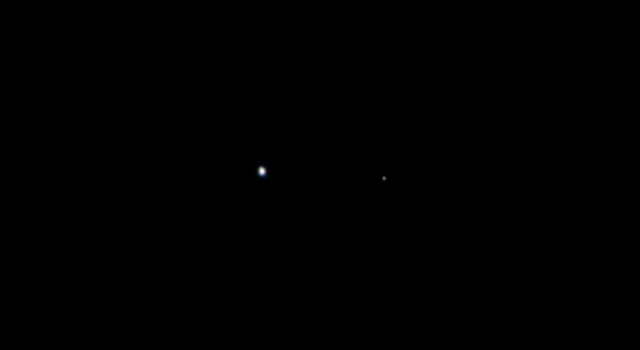
Three weeks into its journey to our friend and lord, Jupiter, Nasa’s Juno spacecraft has taken a look back at its home planet [on the left] and its natural satellite, the Moon.  [Image credit: NASA/JPL-Caltech] From the Nasa press release “This is a remarkable sight people get to see all too rarely,” said Scott Bolton, Juno principal investigator from the Southwest Research Institute in San Antonio. “This view of our planet shows how Earth looks from the outside, illustrating a special …

Read more…

Countdown to revelations about planning practices

Today is the deadline for responses to a Friends of the Earth online survey that has attracted over four hundred submissions on local planning practices. Responses from across society and the professions, including a number of revelations from within the developer-planner nexus, promise to make for uncomfortable reading for those charged with the protection of our natural and built environments. Here, the Director of Friends of the Earth, James Orr talks about some of the findings. From the stories about one new …

Read more…

Hurricane Irene: “one scary big storm…”

As Hurricane Irene heads for the North Carolina coast, US President Barack Obama cuts short his family holiday in Martha’s Vineyard, by a day, warning the public that “All indications point to this being a historic hurricane”.  The Guardian report adds that “Obama’s wife and daughters will travel back as planned on Saturday”.  [Image credit: NASA/NOAA GOES Project]   The GOES-13 satellite saw Hurricane Irene moving through the Bahamas on August 25, 2011 at 1402 UTC (10:02 a.m. EDT) and far …

Read more…

The Galactic Centre Revisited

While waiting, hopefully, for the arrival of the James Webb Space Telescope, here’s a short video of what the current space telescopes, particularly Nasa’s Spitzer and ESA’s Herschel, have seen at the centre of our galaxy.  The above image is a three-color composite, showing infrared observations from two of Spitzer instruments. [Image credit: NASA/JPL-Caltech].  Video from SpitzerSpaceCenter. As well as the twisted ring of very dense and cold gas and dust at the galactic centre, there have been other amazing structures observed.  Then there are the “colossal swathes of …

Read more…

“Good catch, Ron!”

Whilst Earth-bound observers of the annual Perseids meteor shower had to contend with a full moon this year, others had a more privileged view.  Like Nasa astronaut Ron Garan, orbiting on the International Space Station, who captured this stunning image of a fragment of the Swift-Tuttle comet burning up in the Earth’s atmosphere. [Image credit: NASA Image ISS028-E-24847].  Science at Nasa explains in this short video. And you can stay “Up all night” watching the skies, again, courtesy of the camera at Nasa’s Marshall Space …

Read more…

“We were painting out political statements…”

The North Belfast News provides an example from the New Lodge area in north Belfast of what happens when “the guerillas” become “the people in power”, and are “pilloried as ‘traitors’ by their young challengers”. From the North Belfast News The day after the clean-up fresh graffiti was daubed on the walls in the Carlisle area of the New Lodge. The slogans included ‘Oppose British Internment’, ‘Free Marian Price’ and ‘Support the POWs’. “We were painting out political statements and …

Read more…

“Strange things happen in the bog.” – Redux

[Image from RTÉ report] Prehistoric human remains found partially buried in a leather bag in a bog near Portlaoise, County Laois, by Bord na Móna workers yesterday are believed to be the over 2,000 year-old body of a sacrificial victim, possibly a young woman.  Here’s a 2007 National Geographic article on Iron Age Europe’s bog bodies.  And from today’s Irish Times report Mr [Eamonn] Kelly [keeper at the National Museum’s Irish antiquities division] said the body would initially have been buried at a considerable depth. …

Read more…

Opportunity at Endeavour

Last seen, on Slugger, at the edge of the football-field sized crater Santa Maria, Nasa’s Mars Exploration Rover Opportunity has arrived at its next destination – the 22km wide crater Endeavour.  3 years and 13 miles from its first destination, Victoria crater. [Image Credit: NASA/JPL-Caltech/Cornell/ASU] A portion of the west rim of Endeavour crater sweeps southward in this color view from NASA’s Mars Exploration Rover Opportunity. This crater — with a diameter of about 14 miles (22 kilometers) — is more …

Read more…

A poem for (yester) day – Affshore

In the early 90s I was living in Portmuck, Co Antrim, with a small child who thought the beach was where you lived, rain or shine, day or night. A gas pipeline was being laid between the Ayrshire and Antrim coasts, and the ‘supergun‘ scandal was in the news. Then the same news told us that all up the coast old phosporous bombs were washing ashore, and igniting in contact with the air. It turned out they were the refuse …

Read more…

“these could be the first known Martian locations with liquid water”

A BBC report notes the fascinating interpretation being made of some more wondrous images from the HiRISE camera on the Mars Reconnaissance Orbiter.  MRO image gallery here.    From JPLnews Here’s an animated gif showing the features of interest. This series of images shows warm-season features that might be evidence of salty liquid water active on Mars today. Evidence for that possible interpretation is presented in a report by McEwen et al. in the Aug. 5, 2011, edition of Science. These images come …

Read more…

Journey to Jupiter

As the BBC reports, and the Guardian notes, Nasa’s Juno Mission to our friend and lord, Jupiter, is scheduled to launch this afternoon on an Atlas V rocket.  There’s an impressive Juno mission website too.  Lift-off at 15:34 UT [4.34pm BST].  Here’s a short overview of the mission.  Video credit: NASA/JPL-Caltech. And, if you have time, here’s the full science briefing via NasaTV. You can also watch the launch live via NasaTV.  Or, indeed, here! Update2  I’ve replaced the live Ustream video with …

Read more…

Vesta’s dark side [and possibly a colourful one]

As the BBC spaceman, Jonathon Amos, notes Nasa’s Dawn spacecraft has taken a close look at the 530 km wide giant asteroid Vesta’s northern hemisphere– to add to all those earlier images.  This image was taken on 23 July, at a distance of about 3,200 miles (5,200 kilometers) away from the proto planet Vesta.  Image credit: NASA/JPL-Caltech/UCLA/MPS/DLR/IDA.   And in a short while, 1700 UT [6pm BST], Nasa will be holding a press conference to present the latest findings.  Which may include some colour …

Read more…