One of life’s true delights is sitting on a blazing sunny day, such as today, on a stool outside one of the many bars in Pamplona’s old town having a beer and just watching the world pass by. The origins of Lo Viejo, El Casco Antiguo, El Casco Viejo dates back to 75 B.C., when the Roman general Pompey the Great founded a settlement called Pompaelo on an earlier Vascon settlement and was the point of conflation of the city’s three rival boroughs, Navarrería (the oldest and populated primarily by native Basques/Navarrese), San Cernin (populated by French merchants and artisans) and San Nicolás (also French-influenced, often at odds with San Cernin). Conflicts between boroughs were frequent, sometimes violent and streets and churches were built to delineate, define and defend these boroughs, e.g., La Iglesia de San Saturnino, La Iglesia de San Nicolás, which still exist as daily functioning churches in Pamplona today.
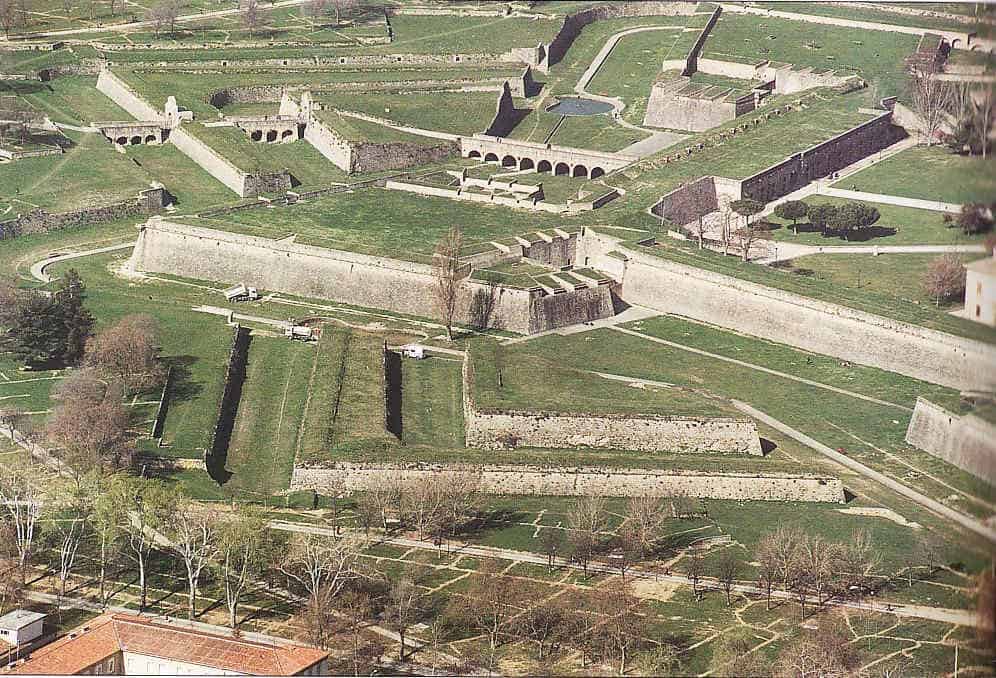
En 1423, King Charles III of Navarre issued the Privilegio de la Unión, merging the three boroughs into one city to end their conflicts. An Ayuntamiento (City Hall) was built where the boroughs met, symbolising unity. Fortifications and civic buildings expanded. From the days of Pompaelo the old town of Pamplona has been a walled city and the conquest of El Reino de Navarra, the last Kingdom to be conquered giving us the basic foundation of what we know as Spain today, by the forces of Los Reyes Católicos, Isabella I of Castile and Ferdinand II of Aragon, in 1512. Later in 1571 Philip II of Spain ordered the refortification of the walls and the construction of the fortress La Ciudadela, (now a municipal park)
Entrance to the old city walls at El Portal de Francia

La Ciudadela fortress
While the main shopping area of Pamplona is situated just outside the Old Town Lo viejo is packed with bars, restaurants and smaller more localised shops and most of the city’s eating, drinking and socialising takes place there, as does the majority of events in San Fermines, the world famous festival which takes place annually from the 6th to the 14th of July, including the (in)famous encierro, where eight full grown bulls are run through the streets at 8 o’clock every morning and chase/are chased by hundreds of corredores (runners). Lo Viejo is also densely populated all year round and it’s what estate agents call ‘a desirable location’ and while the residential stock is centuries old the property prices are amongst the highest in the city.
Which brings me away from my adopted home city to my real home city.
The contrast between the centre of Pamplona and Belfast City Centre is enormous. While Belfast City Centre has its fair share of bars and restaurants, particularly around the High St/Dunbar Link/York Street Cathedral Quarter area, what it’s fundamentally missing IMO are residents. Now, of course there are historical reasons for this, the infamous erstwhile ‘Ring of Steel’ not being the least, and while there have been residential developments around the quays area and the new student accommodation for the new UU campus at York Street some parts of the City Centre are a real kip. North Street, specifically Lower North Street, Garfield Street and Rosemary Street look like abandoned parts of Detroit. Royal Avenue and both parts of Donegal Street seem to be on a slow death decline to the same thing.
What I don’t get is this, all along the streets I have just mentioned there are three and four floors of vacant unused property going to waste above the (many dilapidated) commercial units at ground level. Just imagine how vibrant the City Centre could become were these to be refurbished and regenerated as residential property? There are complaints about the lengths of social housing lists and segregated living. Wouldn’t remodeling existing infrastructure be cheaper than building new builds? Were the properties to be a mixture of social and private units couldn’t such an initiative assuage the social housing lists and wouldn’t such a model of living be truly integrated as opposed to segregated?

I know little about the undoubted ownership and property rights of the properties in question and perhaps on that front I’m being a little naive but what’s to stop the City Centre being rezoned as a residential area being subject to such properties having a clause that if they’re vacant for more than five years they’d be liable to a municipal Compulsory Purchase Order?
I’m a Belfast native and I love the city, but with a little will and imagination, the City Centre could be much, much more than it currently is.

Hughie Beag is a West Belfast native and recovering legal scholar who spends lots of time in his spouse’s native Basque Country
Discover more from Slugger O'Toole
Subscribe to get the latest posts sent to your email.