
“Anti-English sentiment in Ireland had healed. But Brexit has brought it all flooding back.”
So writes Irish Times columnist Una Mullally in the Guardian. Is she right? Most comment here will not only echo but amplify Una’s comments. But I think – I hope – she exaggerates and all will be restored when we discover that the legacy of Brexit – or no Brexit- – will not as bad as all that.
She makes a big thing about the British Conservative press and politicians “drowning out those distraught by Brexit.” I know them to be far more resilient than that. “ Distraught”? Stung by being stigmatised as “the elite,” they’re bloody mad and on the march. Remainers are on the offensive, as reported in papers from the Financial Times to the New Statesman. They’re determined somehow to plough through the Westminster mud and secure at least the softest of Brexits for withdrawal. And after that – who knows?
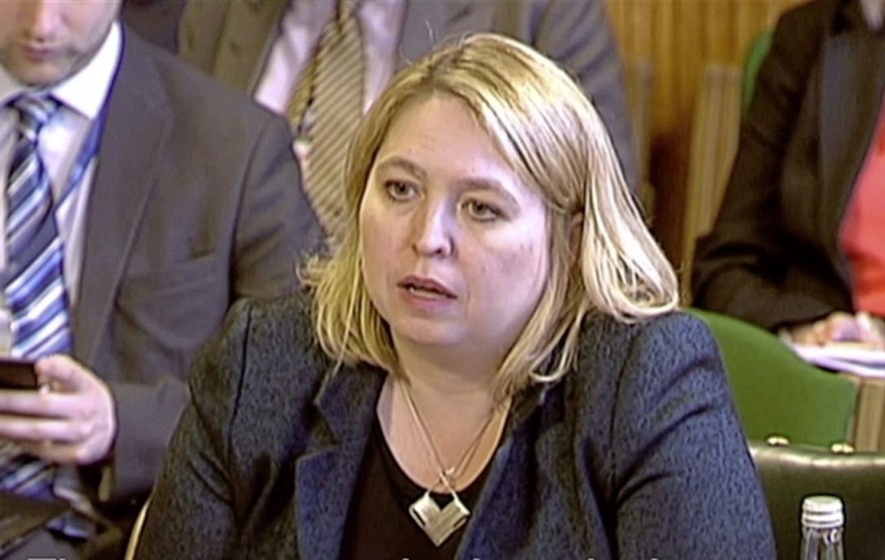
From my own very limited recent experience, I can only say that I spent last week in historic Dublin and Wicklow in the company of one very English person ( incidentally appalled by the desecration of St Michan’s). From taxi drivers to official guides to business folk, they all sucked their teeth about Brexit, expecting – and getting – our total agreement and fellow feeling. Yes indeed there is an eerie sameness about the ignorance of British ministers from Augustine Birrell in 1916 (but at least he was well read) to Karen Bradley today. Ireland is the bogey under the nose they can’t quite see, and feel only under pressure. The wee country is far more sensitive about the bigger one than vice versa. Ireland is to Britain what Britain is to the US. Far more common than British condescension I find, is “Brit guilt,” an emotion so complete that it sweeps away the past as being too awful to contemplate and therefore is itself a hindrance to understanding.
She writes:
Brexit has created many nightmares, but a particularly unpleasant one is the rise of anti-English sentiment in Ireland. British-Irish relations have not just cooled on a diplomatic and political level, but among the Irish population.
It seemed as if anti-British sentiment was at least covered over with a healing gauze if not completely healed. But Brexit, and the behaviour and rhetoric of British politicians, the tone of the trightwing British press, and the constant stream of ignorance about our island from across the Irish Sea, has ripped that bandage off. Everything is exposed now, and it’s a wound that has been, and can be again, mortal.
Every clanger from a British politician – Karen Bradley’s offensive and ignorant statement exonerating British soldiers for their crimes in Northern Ireland; the border mess, exacerbated by the Conservative government’s tactical alliance with the DUP; the clueless remarks emanating from the House of Commons – has not just confirmed, but elevated our suspicions that English (and Brexit was always about Englishness, not Britishness, nor the oxymoron that is now the “United” Kingdom) apathy, ignorance and entitlement towards Ireland is as dominant as ever.
It has also been difficult for the voices of the millions of British people understandably distraught by Brexit to cut through in Ireland, primarily because the hysterical conservative British press has drowned them out. But for every Brexiteer, there is a “well-meaning” English person who doesn’t have a handle on the basic geography and history of their island neighbours.
This is the first modern Irish generation that is unselfconsciously patriotic, embracing a benign yet passionate cultural nationalism that is nonsectarian. The parameters of Irish identity are both expanding and spongelike; reaching beyond cliches, but also soaking up cultural attributes that were often deemed unfashionable by previous generations, such as traditional music, which has seen a resurgence, embracing regional accents in the arts, and reconnecting with the Irish language. But this confluence also offers a new generation an old enemy.
Una Mullally is the acute observer of her own daily experience. She doesn’t discuss – or maybe even recognise – southern ignorance of the north, but that’s another story. She captures the nuances of shared feelings without going over the top like of Fintan O’Toole. Except for one thing at the end. Surely the new “ unselfconscious patriots” of today who have recaptured traditional Irish culture, no longer need “the old enemy” of British neo- colonialism, or whatever you chose to call it, to boost their self confidence. By definition. So things will work out OK in the end, right?

Former BBC journalist and manager in Belfast, Manchester and London, Editor Spolight; Political Editor BBC NI; Current Affairs Commissioning editor BBC Radio 4; Editor Political and Parliamentary Programmes, BBC Westminster; former London Editor Belfast Telegraph. Hon Senior Research Fellow, The Constitution Unit, Univ Coll. London
Discover more from Slugger O'Toole
Subscribe to get the latest posts sent to your email.


