James Molyneaux, master of Ulster Unionist immobility remembered

Of the newspaper  obits of Jim Molyneaux so far Chris Ryder’s ( ex Sunday Times) captures him best. He became leader  of the Ulster Unionist party first at Westminster then overall, largely  because  he was the senior man at Westminster and Stormont flickered into half-life for only a few short months during his time. A shy man with impeccable manners, it could be said that his courtesy often concealed  his endless political manoeuvring   to hold the chronically divided Ulster Unionist party …

Read more…

Since we’ve already had a Famine farce, we might as well now have the satire…

Perhaps we care too much about profanities that don’t really matter, and care too little about the ones that really do. Prompted by the controversary over a sitcom that hasn’t even been written yet, Diarmuid Ferriter has this confession to make: I did not feel any great shame, over 15 years ago, in laughing at a satirical song about the Irish Famine of the mid-19th century, and I was not alone. Under the title The Potatoes aren’t looking the best, …

Read more…

Serial Podcast: What do you think?

Have you heard of Serial or are you happy over there, living under your rock? For those who fall in the latter camp, let me briefly summarise. Serial is a podcast, first released last month, which seeks to shed light on the real life case of a Baltimore teenage girl, Hae Min Lee, who was murdered in 1999. Hae’s ex-boyfriend, Adnan Syed, also a teenager at the time, was arrested and jailed for her murder but he has always maintained …

Read more…

BIPA and facing the difficult politics of a common history….

The British-Irish Parliamentary Assembly  delved deep into history to commemorate the centenary of the Great War and to highlight the long hidden and shared contribution of soldiers – Catholic and Protestant, Nationalist and Unionist – as a means of overcoming present differences. Many cite the comment by Churchill at the end of that war that “The whole map of Europe has been changed … The mode of thought of men, the whole outlook on affairs, the grouping of parties, all have encountered violent and tremendous changes in …

Read more…

Another Cahill angle entirely…

Well I never. Mairia Cahill’s late doting old great uncle exposed as a tout by – the  Daily Mirror! According to Mairia he had advised her to go the RUC . It smelt like an alibi for the Provos when she referred to it in that riveting Spotlight interview. But this! Joe Cahill, who helped found the Provisional IRA, was pictured abusing a 14-year-old girl in a car in the 1970s, the sources said. But instead of being prosecuted, the images were used by …

Read more…

On Jonathan Powell – a vision is needed for talking to terrorists

I haven’t yet managed to read Jonathan Powell’s new book: Talking to Terrorists: How to End Armed Conflicts”,  but potted  versions like this one in Prospect magazine  delivers his thesis with his usual crispness. “In democracies we cannot kill all the terrorists, so we will have to talk to them at some stage! And just in case you think  he has been seduced by his own experience, he anticipates  the obvious criticism. I am not suggesting that there is a Northern …

Read more…

Ireland, 1912-1923 An Island in Turmoil & Transition A series of 7 talks and debates

I love a good talk and debate, it’s like the theatre only cheaper and more interesting. In this decade of centenaries there is an abundance of talks for history junkies. Recently I found out about this series of talks happening in Belfast. I missed the first few but will defiantly be at the rest of them. Tom Hartley and Philip Orr are both very engaging speakers. Below are the details of the talks, for context I have left in the earlier talks. Ireland, …

Read more…

Investment bubbles: houses, cars and tulips

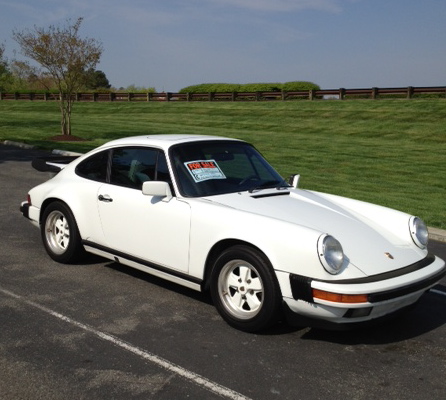
This is not really a typical slugger topic but I thought it would be interesting to look at parallels with the housing bubble in Northern Ireland (and even more so the RoI). Keep that in mind if you find what I am writing too tedious. I have a major interest in classic cars. I have a pretty encyclopaedic knowledge of 1960s onwards sporty cars and have got assorted classic car magazines for years. My real passion has always been Porsches. …

Read more…

“In the last analysis the test of nationality is the wish of the people.”

Ronan Fanning took the theme for his most recent book from David Lloyd George in the House of Commons in 1919, “there is a path of fatality between the two countries and makes them eternally at cross purposes“. In the Irish Times Fanning takes John Bruton to task for suggesting that the Home Rule Bill be commemorated this September, for the very specific reason that (like the unified island it was supposed to presage) it never properly or fully came …

Read more…

Robert Porter, a humane if luckless minister of home affairs

Sir Robert Porter, known  to all as  “Beezer” who has died aged 90 gave the lie to the image of a jack booted Unionist minister at the beginning of the Troubles. He was indeed minister of home affairs in 1969 when demonstrations gave way to riot and finally to the events of August 1969 when the Army took over control of the streets after days of rioting in Derry and Belfast culminating in the burning of Bombay St. He was …

Read more…

Personal memories of Sunningdale and the UWC strike – the lost opportunity for a generation

Although I couldn’t attend the conferences they’ve sparked off vivid memories. This was a time when not only Northern Ireland seemed ungovernable but Britain too. At the Sunningdale civil service college in Berkshire we in the media were stuck in the conference annex for days because of the difficulty of getting taxis during the three day week, then in full force.  TV had  to close down at 10 o’clock each night – it was  that bad. In spite of the atmosphere of crisis in England hopes …

Read more…

Why spoil two parties by rowing about a royal invitation in 1916 that doesn’t exist?

There is a very peculiar little controversy going on in Dublin over inviting the “royals “ to 1916 commemorations. It involves catty exchanges between Maurice Manning, NUI chancellor, one of several former nearly men in Irish politics  and a part time historian, and the equally learned professional modern historian Diarmaid Ferriter.  In his latest  blast in the Irish Times, Ferriter opposes the idea which the newspaper itself seems to approve.  It would be too much to say that this is a re-run of the …

Read more…

Damning comparison between Dev’s Ireland and Salmond’s Scottish Free State

Kevin Toolis, a Scot of born of Irish parents who wrote “Rebel Hearts”, one of the best books on the IRA on the ground, returns to a previous theme and makes this devastating comparison between an independent Scotland in prospect and post 1916 Ireland in the FT(£). We do have one good historical model of what it is like to carve out a nationalist state from within the political union of the UK but it is not one the SNP is …

Read more…

The Easter Rising: romance and regret but no barrier to reconciliation

in response to David McCann’s very personal and sincere post, I must say that the Rising is part of my history but not part of my cause. I approach it with fascination and regret. Regret for the delayed victory for physical force it represented. But how could it not inspire? The world was in turmoil; nothing would do but for the “Army of the Irish Republic” to start their own little war too. And of course the Jesus parallel and the martyrology still …

Read more…

“Post-nationalist Ireland has arrived.”

[Once more into the breach then – Ed]  In yesterday’s Irish News, Patrick Murphy posited three theories to explain what he describes as “the latest dismantling of Irish political and cultural nationalism.”  That would be Martin McGuinness, et al, at Windsor Castle in white tie and tails, and the GAA deal with Sky.  From the Irish News The first theory suggests that the process has been largely fuelled by Britain’s determination to give political cover to the PIRA’s defeat in a …

Read more…

Learning from history: “there was a chance to work things out in a different direction and it wasn’t taken…”

Michael Portillo’s two part radio work on the first world war is well worth grabbing for a listen. Part two is fascinating not least because it looks at the effects of interwar propaganda the widespread acceptance of the idea that the second great war was a general rather than a particular failing: a view brought under particular stress by source material which formed the basis of Griff nach der Weltmacht (Germany’s Aims in the First World War), published by the German …

Read more…

“Everyone has a human right to his or her memories…”

I see Arkiv are going for the Economist model of naming the writing staff (or founding team) but eschewing bylines… Anyhoo, I suspect, given the thoughtfulness of the output on their blog, their submission to Haass is well worth the time to read. In the meantime, with the vexed issue of local troubles related historiography in mind, this quote from the German sociologist Aleida Assmann in particular caught my eye… …nothing is gained by discarding lived experiences merely because they …

Read more…

Coming to a shared understanding of the past in the present is going to be painful, iterative and difficult

How many other things might be tolerated in peace and left to conscience, had we but charity, and were it not the chief stronghold of our hypocrisy to be ever judging one another! I fear yet this iron yoke of outward conformity hath left a slavish print upon our necks. John Milton, Areopagitica, 1644 One of the interesting projects which I think is trying to creatively probe the peace process (or Peace Process™ as it’s occasionally referenced in this parish) is the …

Read more…

The record needs correcting. Britain deserves the main credit for ending the Troubles

Keeping up the legacy of history theme, The Newsletter has asked Paul Bew to develop his idea for the release of government papers on Northern Ireland earlier than the new 20 year rule. The QUB historian and peer  believes that the spate of detailed inquiry reports on what went wrong during the Troubles should be  better balanced by what went right. For that he gives more credit than has perhaps been acknowledged to the Northern Ireland Office. It’s played the …

Read more…

Hesitant moves towards Anglo-Irish understanding in the State papers of 30 years ago

The release of British State papers for 1983 as reported by John Bew in the Irish Times reveals the rocky road at the beginning of the journey towards the Anglo-Irish agreement of 1985. Thatcher was irritated by FitzGerald’s preachiness as he tried to build some trust after Haughey’s disastrous first administration.  While FitzGerald was deeply frustrated by what he regarded as her narrow minded defence of endless Unionist political stonewalling, he detected enough potential flexibility in British official thinking to keep pegging …

Read more…