Micheál Martin’s pluralist approach is an upgrade to Sinn Féin’s ‘dummymandered’ single option future

People gathered around a table with a charcuterie board

Nationalism risks its own form of “dummymander”: reading the 2021 census as a countdown to unity, much as Texas Republicans redrew their maps on demographic assumptions and lost. The Taoiseach’s new body offers a stronger path, preparing for several futures and engaging every tradition, so that consent is earned rather than assumed.

Go East, Old Man IV: A ballot where nobody votes no

From a Dartmouth parade ground to a Belfast youth club, a Moscow kitchen table and a Tibetan lake, Peter Emerson traces the chance encounters that turned an ex-submariner into a lifelong critic of yes-or-no voting. He also asks what ancient Asia might teach us about deciding things together.

The past in the present: exploring memory and conflict transformation in Northern Ireland

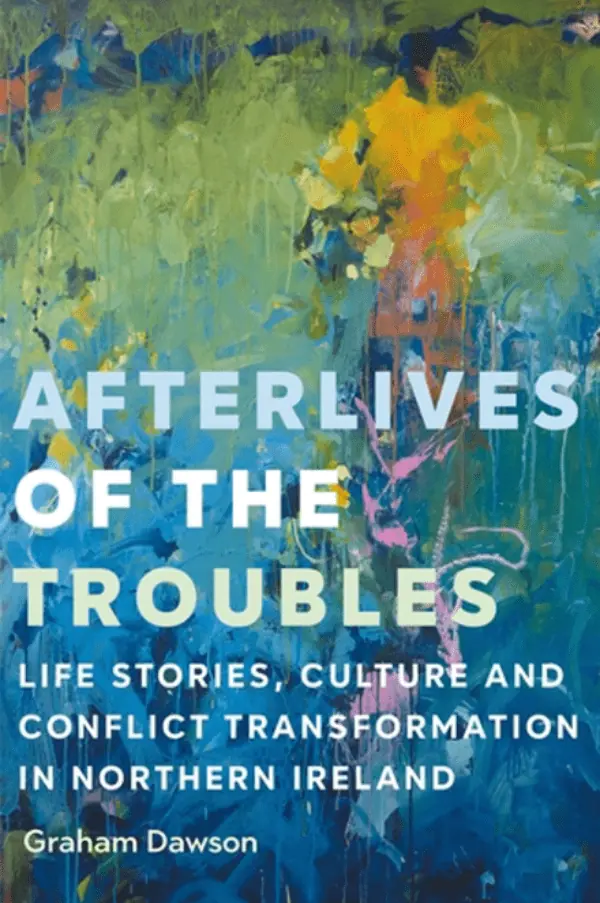
The Memories, Narratives and Histories Research Collective (MNHRC) gathered online to launch Afterlives of the Troubles: Life Stories, Culture and Conflict Transformation in Northern Ireland, by Professor Graham Dawson. Fifteen years in the making, the book draws on oral history, cultural analysis, and lived experience to challenge the assumption that Northern Ireland’s conflict can be neatly divided into “the Troubles” and a settled post-conflict present. Three scholars joined Dawson in conversation: Róisín Higgins (Professor of History at Maynooth University); Claire …

Read more…

Casement, McNulty and the border poll bluff: has nationalism lost its map?

a close up of a container with words on it

Casement Park is demolished and unbuilt, and the SDLP is fighting a sitting MLA in its own ranks. The nationalist vote has barely moved since 1998, even as unionism has declined. Now Jon Burrows is talking up Northern Ireland’s future and challenging Michelle O’Neill to debate it. Nationalism talks up an imminent border poll but has no policy map to get there.

‘Days of conversation, centuries of consequence’: Benjamin Franklin at Hillsborough Castle

The Linen Hall Library in Belfast hosted the final event in its five-part series marking the 250th anniversary of the American Declaration of Independence. The talk, introduced by Patsy Horton, the library’s cultural programmer, was delivered by David Orr, Castle and Collections Manager at Hillsborough Castle and Gardens. His subject was Benjamin Franklin’s 1771 visit to Ireland and his stay at Hillsborough Castle — a meeting whose consequences, Orr argued, reverberate through three centuries of diplomacy. The series was supported …

Read more…

‘It’s all here to be told’: Ulster’s role in the American declaration of independence

The Linen Hall library in Belfast hosted a panel discussion as part of its USA-NI 250 exhibition programme, marking the 250th anniversary of the American Declaration of Independence. The event, “The American Declaration of Independence: American and Ulster Contexts, Links and Legacies,” was chaired by Dr Frank Ferguson of Ulster University, who also serves as chair of the Linen Hall Library’s board. The panel brought together Dr Andrew Holmes (historian of Presbyterianism at Queen’s University Belfast); Aaron Callan (Alderman, Causeway Coast and Glens Borough Council); Paul McGuigan (documentary filmmaker at Northern …

Read more…

Where have all the Prods gone? The PUL Exodus and its impact in Derry/Londonderry

A new report on “the Exodus” — the displacement of Protestant, Unionist and Loyalist families from the West Bank of the Foyle between 1968 and 1998 — finds a prolonged, incremental movement with no single cause, and an experience still awaiting the civic and political acknowledgement that would place it alongside, not against, the memory of CNR communities.

Ten things we learned about the Belfast Fleadh?

person holding brown round ornament

Fleadh Cheoil na hÉireann came to Belfast for the first time and drew a crowd that may make it the biggest ever held. It also put Ulster Scots music in front of an all-island audience and got a DUP deputy First Minister speaking Irish. Ten things the week told us, and one it didn’t.

Not Scots, and Barely British: Rethinking Ireland’s Founding Role in America

a group of men in kilts playing a game of bagpipes

This 4th July, both Irish states will fete America’s founding. But the cherished narrative of Presbyterian Scots-Irish frontiersmen as the backbone of the Revolution obscures the Gaelic Irish written out of the record, the Protestant migration unionists prefer to forget, and the political convenience shaping how both traditions remember.

Northern Ireland’s Brexit Edge: Building on what works, not what has failed…

No horse and wagons sign in a cemetery

Britain’s productivity flatlined in 2008, eight years before the referendum. Brexit added cost, and serious frictions but the real causes run deeper: weak investment, weak industrial strategy, and an employment model that grew jobs while output per hour stalled. Even Northern Ireland, the one part of the UK with a genuinely distinctive post-Brexit settlement, tells the same story.

Riots in Northern Ireland: this is also about racism

My dad died two days before Christmas in 2023. On the day of his funeral rain poured from the heavens. We waded through thick mud to get to his grave. “Christ,” my brother remarked, “it’s like the f**king Somme.” In Northern Ireland, protestant burials are often small, private affairs. Only close family go and you must be invited to attend. When we arrived, we expected a small number of people. To our surprise, there was a crowd. My dad was …

Read more…

‘The violence is continuing’: scholars examine embodied memory of conflict

The International Conflict Research Institute (INCORE) at Ulster University hosted a seminar to mark the exhibition “Aftershocks: The Sensory Afterlives of Violence”, on display at the university’s Belfast campus until 13 May. The seminar brought together Professor Roísín Higgins (Maynooth University), who organised the event and chaired proceedings, in conversation with Professor Élise Féron (Director of INCORE); Dr Lisa Fitzpatrick (Senior Lecturer in Drama at Ulster); and Dr Adrian Grant (Lecturer in History at Ulster). The discussion focused on their research and its relationship to embodied memory — how conflict …

Read more…