Tevatron: “My money is on the false alarm at the moment”

A somewhat excited BBC report of potentially ground-breaking interim results from Cern LHC rival accelerator, Tevatron, is undermined by the statistical possibility of a false alarm. The Guardian’s tame particle physicist, at Cern, Jon Butterworth explains. If the histograms and data are exactly right, the paper quotes a one-in-ten-thousand (0.0001) chance that this bump is a fluke. That’s pretty small; although bear in mind that lots of distributions like this get plotted. If you plot 100 different distributions, the chances become about …
Read more…

“you may think it’s a long way down the road to the chemist’s…”

With Cassini exploring Saturn’s moons, and Messenger finally at Mercury, the BBC’s Spaceman, Jonathan Amos, takes an interesting look at the future prospects for interstellar travel.  And he starts with this observation of Voyager’s 33-year-long journey. I’ve been troubled of late by the scale of things, by the vastness of space. It’s been brought into focus by two things, I think. The first is the Voyager 1 probe – the most distant man-made object from Earth. I’ve written a couple of …

Read more…

Weather watching… on Titan.

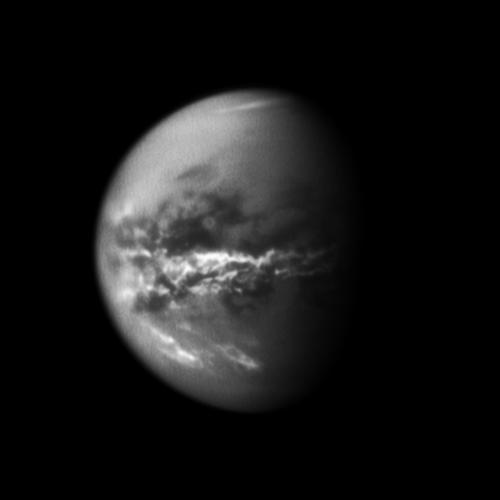
Nasa’s Messenger spacecraft may have finally arrived in orbit around Mercury, but the Cassini probe has been exploring Saturn’s system of moons since 2004 – some archived posts here.  [Image Credit: NASA/JPL/SSI] The latest images show seasonal weather patterns, and apparently associated surface changes.  From the Nasa/JPL press release Extensive rain from large cloud systems, spotted by Cassini’s cameras in late 2010, has apparently darkened the surface of the moon. The best explanation is these areas remained wet after methane rainstorms. …

Read more…

Messenger to Mercury

Tonight at 12.45am [GMT] Nasa’s Messenger spacecraft will begin a 15 minute engine burn timed to take it into orbit around Mercury – the first spacecraft to do so.  (All images credit: NASA/Johns Hopkins University Applied Physics Laboratory/Carnegie Institution of Washington) Launched on 3 August 2004, Messenger’s taken a circuitous route to the innermost planet. It’s second, and final, look at the Earth was in August 2005. Twice past Venus, the second time in June 2007 Before not one, not two fly-bys, but …

Read more…

The Acts of Man – Concerns about ‘Mark 1’ nuclear reactors go back years

The unfolding crisis at the Fukushima Daiichi nuclear reactors has begun to prompt a re-examination of Japan’s failure to respond to decades of concern about the design of the Mark 1 reactors used at the Fukushima Daichii plant and a wholesale refusal by that country’s Government and Courts to address citizen-led concerns about the inadequacy of reactor designs for earthquake-prone locations. Wikileaks Central writer kgosztola has reviewed Japan’s  history of downplaying accidents and lax regulation.  The Citizens Nuclear Information Centre in Tokyo has …

Read more…

Gamma-Ray Bursts explained

I have, from time to time, mentioned the potentially lethal, if spectacular, phenomenon known as a Gamma-Ray Burst in my occasional science posts.  By coincidence, the BBC have online digestible clips of past Horizon programmes.  Including this informative clip from 2001 explaining Gamma-Ray Bursts in stellar nurseries, with a suitably ominous narration.  Enjoy!  And, let’s be careful out there… Pete Baker

Mission to Mars…

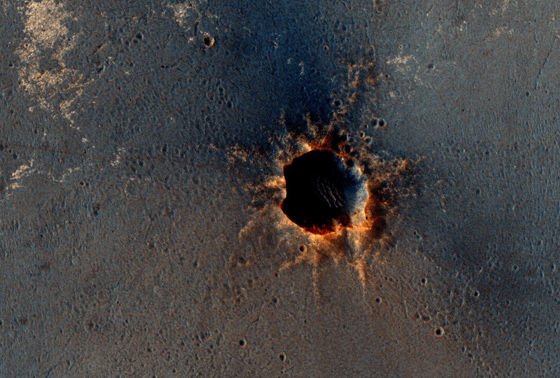
The US National Research Council have expressed doubts about the extent of US involvement in the planned joint ESA/Nasa rover mission to Mars, as well as two subsequent orbiter missions – one to the Jovian moon Europa and the other to Uranus. But, for now, Mars remains under close scrutiny.  The latest false colour image from the Hi-RISE camera on Nasa’s Mars Reconnaissance Orbiter shows the Mars rover Opportunity at the edge of a football-field sized crater, Santa Maria, where it’s been exploring …

Read more…

“It did its grand tour past the planets and it just goes on, on this voyage of discovery.”

The farthest man-made object from Earth, at some 17.4 billion kilometres, Nasa’s Voyager 1 spacecraft is still performing acrobatics 30-odd years after it was launched.  From the BBC report Voyager is executing a series of roll manoeuvres to get one of its instruments into the optimum position to measure particles sweeping away from the Sun. Controllers at the US space agency’s Jet Propulsion Laboratory in Pasadena, California, report a perfect response from the probe. “I liken Voyager to an old car,” …

Read more…

Final Flight of Discovery

After a number of postponements due to technical problems, the Space Shuttle Discovery is scheduled to lift-off for the last time from the Kennedy Space Centre tonight at 9.50pm [GMT]. After 38 missions to date and more than 5,600 trips around the Earth, it’s the final flight of Discovery – on Mission STS-133.  They’re heading to the International Space Station where ESA’s ATV Johannes Kepler has just docked. Discovery will become the first shuttle to be retired.  Only two Space Shuttle missions remain scheduled – Endeavour on …

Read more…

Look to the north!

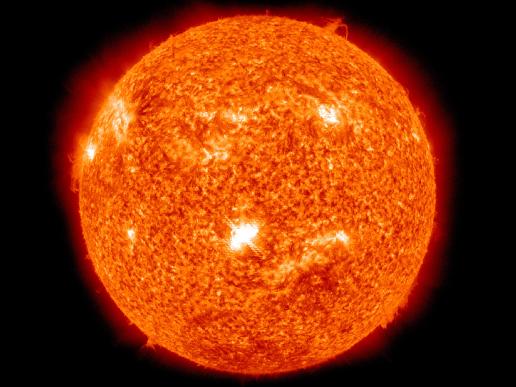
The BBC points to the possibility, given clear skies, of further displays of the Aurora Borealis being visible from Northern Ireland following a series of large solar flares – including a level X2.2 flare on the 15th, the most powerful since 2006.  But, as the Professor and a separate BBC report notes, there are some practical concerns. The China Meteorological Administration reported that the solar flare caused “sudden ionospheric disturbances” in the atmosphere above China and jammed short-wave radio communications in the …

Read more…

Rendezvous with Tempel 1

[Image credit: NASA/JPL-Caltech/Cornell]  Late last night Nasa’s Stardust NExT spacecraft swept past Comet Tempel 1 on the final leg of its 12-year mission.  The BBC reports that the spacecraft was about 180 km (110 miles) from the 7.5 km wide comet nucleus during closest approach – the earlier linked Nasa report more accurately records that closest approach at 181 km (112 miles). There was, of course, a much more intimate rendezvous with Comet Tempel 1 by the Deep Impact probe in 2005…  a probe which subsequently completed a successful …

Read more…

“If Herivel had not been recruited in January 1940, who would have thought of the Herivel tip?”

There’s a lovely piece of biographical detail in The Guardian‘s obituary of Belfast-born science historian, and former World War II codebreaker at Bletchley Park, John W. Herivel who died on 18 January 2011, aged 92.  From The Guardian obituary Born in Belfast, Herivel had a civil servant father and was educated at Methodist College, from where, in 1937, he won a scholarship to Sidney Sussex College, Cambridge. He had a strong sense of humour. Unable for security reasons to tell one potential …

Read more…

“It’s like exploring an alien planet where no one has been before.”

Today is the last planned day of drilling this season for the Russian team attempting to reach Lake Vostok – the largest sub-glacial freshwater lake on Earth. The project to drill down to the lake, which covers 16 square kilometres and has been sealed under approximately 3,750m of ice in the Antarctic for around 15 million years, began over 20 years ago. Earlier this year reports suggested they would be short by 20-30 metres, but since then there have been reports that they are now only 5 metres …

Read more…

“Of the 54 new planet candidates found in the habitable zone, five are near Earth-sized.”

The Irish Times has a detailed report noting the confirmed discovery of 6 large exo-planets closely orbiting a star in the system, Kepler-11, approximately 2,000 light years from Earth. Even more remarkable are reports that the Kepler space observatory, launched in March 2009, first light in April 2009, has now identified 1,235 planetary candidates – and 54 candidates within the habitable zone – from the data for 156,453 stars observed from the beginning of the science observations on 2 May through 16 September 2009. From the Nasa …

Read more…

LHC: “if nature is kind to us and the lightest supersymmetric particle, or the Higgs boson, is within reach…”

The Large Hadron Collider at Cern had been scheduled to take a year-long break at the end of 2011, before returning at full power, 7 TeV per beam, in 2012/13. But, as the Guardian’s tame particle physicist Jon Butterworth notes, a new schedule has been announced.  From Jon Butterworth The LHC will run through 2011 and 2012, rather than shutting down for more than a year at the end of 2011 as previously planned. This is great news for those of …

Read more…

Why should emigrants not have a vote in Irish elections?

Some of you may have noticed that our own Peter Geoghegan had a thought provoking piece in the Guardian earlier in the week on the perennial chestnut of votes for emigrants. It’s a very good question for a country that perennially relies on whole generations to leave an overcrowded domestic market to seek their living elsewhere. As Peter points out, other nations are a great deal more generous to their diasporas: More than 110 countries allow passport holders living abroad …

Read more…

Getting beyond the likely ‘gridlock’ of future reforms…

There’s a canny piece from John Rogers, Labour’s former Attorney General from 1984-87 in the Irish Times today on the subject of political reform in the Republic. He starts by usefully restating the bleedin’ obvious on why the much researched and much debated Seanad reforms never happened: The truth probably is that none of the political parties wanted real reform of the Seanad because real reform inevitably would mean Seanad electoral reform. Of course there could not be such reform …

Read more…

Breaking the deadlock over academic selection 2

Selection at 11 is  frowned upon  but choice would be acceptable at 14. The Times (paywall) leads with a progress report on Kenneth Baker’s plan to revive technical colleges. The potential relevance to Northern Ireland is obvious. Up to 70 technical schools teaching practical skills could be opened before the next election, according to Lord Baker of Dorking, the former Tory education secretary who is heading the scheme. The coalition has pledged to open technical schools, with links to employers, in at least 12 …

Read more…

“It is all part of a grand cycle that turns over the course of billions of years”

A wondrous composite image of our nearest galactic neighbour, the Andromeda galaxy, as unveiled on the BBC’s Stargazing Live programme tonight.  Combining an infrared view from ESA’s Herschel observatory with an X-ray view by the similarly orbiting XMM-Newton observatory, it shows at least five concentric rings of star-forming dust [infrared in orange] along with X-ray sources [in blue] where collapsed stars – white dwarfs, neutron stars and black holes – are located.  It’s a similar composite view to that taken of the Whirlpool …

Read more…