Stargazing, and [exo]planet hunting…

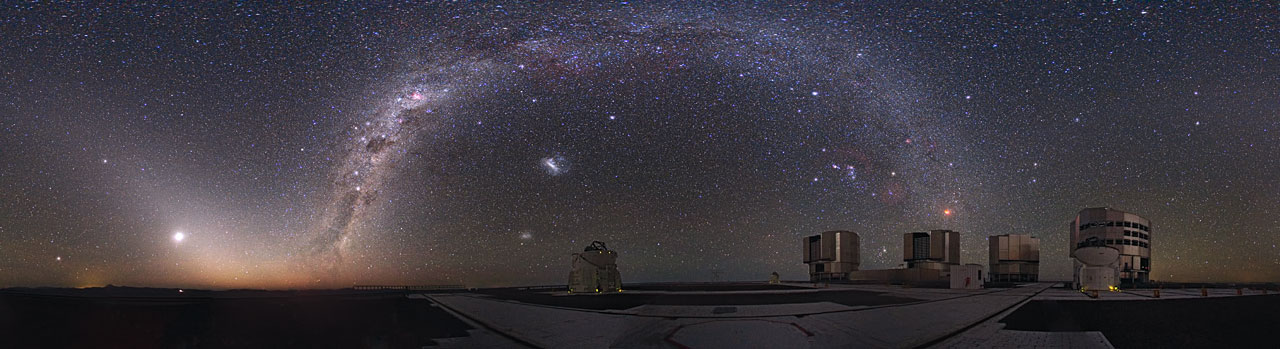
The last three nights saw the return to BBC2 of popular astronomy show Stargazing Live – presented by Brian Cox and Dara O’Briain.  Hopefully it will become, at least, an annual fixture. [Image credit: ESO/Y. Beletsky] The three hour-long programmes are still available, for now, on the iPlayer.  The entertaining ‘after-show’ shows, Back to Earth, appears to be missing are also available. If you’ve been paying attention you’ll have recognised some of the material – for example, the Lunar Reconnaissance Orbiter’s images …

Read more…

Phobos-Grunt: “Re-entry is now imminent”

The BBC’s spaceman, Jonathan Amos, reports on the imminent re-entry of the 13-tonne failed Russian Mars probe, Phobos-Grunt.  Included in that 13-tonnes are more than 10 tonnes of fuel which is expected to explode when the aluminium storage tanks rupture during re-entry.  From the BBC report The Russian space agency says little of the probe will survive to the surface. It calculates no more than 200kg in maybe 20-30 fragments. Precisely where on the Earth’s surface – and when – this …

Read more…

“It’ll be back in about 600 years…”

In this short video ScienceAtNasa takes an informative look at the surprisingly robust sun-grazing Comet Lovejoy. And here’s the stunning video from the crew of the International Space Station again. [Video courtesy of the Image Science & Analysis Laboratory, NASA Johnson Space Center] Pete Baker

The Written World

Here’s something to keep you occupied over the weekend.  [Will there be a quiz? – Ed]  Possibly…  The BBC magazine has an short and interesting, but un-embeddable, audio slide-show of Melvyn Bragg’s Radio 4 five-parter, In Our Time: The Written World.  The British Library has more online information about the texts and technology featured in each of the programmes.  From Chinese oracle bones, the oldest items in the library, to 17th and 18th Century news books, news pamphlets and newspapers.  As …

Read more…

ISS Commander: “the most amazing thing I have ever seen in space”

Having, unexpectedly, survived its solar close encounter, Comet Lovejoy is providing some spectacular views for early morning observers in the southern hemisphere.  Spaceweather has a growing collection of images. But the most spectacular view has to have been the one captured by the crew of the International Space Station (ISS).  Wow!  [Video courtesy of the Image Science & Analysis Laboratory, NASA Johnson Space Center] Usually they make do with stunning views of aurorae…  Here’s ISS Commander Dan Burbank speaking to WDIV-TV …

Read more…

Sleigh Ride over the Red Planet

A short seasonal diversion from JPLnews, using images of the real landscapes of Mars taken by the High Resolution Imaging Science Experiment (HiRISE) camera on NASA’s Mars Reconnaissance Orbiter.   Pete Baker

Comet Lovejoy is still with us!

Rumours of the demise of Kreutz sungrazing Comet Lovejoy may have been greatly exaggarated.  NASA’s Solar Dynamics Observatory caught Comet Lovejoy emerging from its scorching close encounter with the sun.  [Video Credit: NASA SDO] As the Science at Nasa press release notes Comet Lovejoy was discovered on Dec. 2, 2011, by amateur astronomer Terry Lovejoy of Australia.  Researchers quickly realized that the new find was a member of the Kreutz family of sungrazing comets.  Named after the German astronomer Heinrich Kreutz, …

Read more…

All Ireland Cancer Atlas 1995-2007

Hats off to the cross-border research by the Northern Ireland Cancer Registry at Queen’s and National Cancer Registry, Ireland down in Cork for their co-production of the All Ireland Cancer Atlas 1995-2007. The conclusions and discussion are surprisingly accessible (all sections are linked below). While it may make for chastening reading (or help sharpen up ideas for a New Years Resolutions), it hopefully will inform health service provision, which is timely in light of the appearance of the Compton Review. Of particular interest in terms of …

Read more…

LHC: “Evidence soon emerged however that this particular squib might be of the damp variety…”

After the hype, “somewhat excited” reporters are straining to sound convincing – the Guardian live-blogged the presentation.  And Matt Strassler was at the circus in CERN. I have been chatting with my colleagues, all particle physicists working at or visiting CERN, and finding out how many say that the evidence presented today convinces them that the Higgs has been found.  So far — Experimentalists — No: 9,  Maybe: 1, and a good one; will explain shortly.  Yes: 1 (Tomaso Dorigo, of …

Read more…

Kepler-22b: “This is a major milestone on the road to finding Earth’s twin”

By the time its last catalogue of exoplanet candidates was released in February,  Nasa’s Kepler space observatory, launched in March 2009, first light in April 2009, had identified 1,235 planetary candidates – and 54 candidates within the habitable zone. The Kepler team have now identified 2,326 planet candidates – of those, 207 are approximately Earth-size, 680 are super Earth-size, 1,181 are Neptune-size, 203 are Jupiter-size and 55 are larger than Jupiter.  And there are now 48 planet candidates in their star’s habitable zone There …

Read more…

“Maybe Picasso did not paint any pictures at all, at least not the Mona Lisa.”

As the Guardian’s Ian Sample notes from the science desk The runup to Christmas looks exciting for the Large Hadron Collider at Cern near Geneva. Staff at the laboratory have arranged a special seminar on Tuesday 13 December at which the latest results in the search for the Higgs boson will be made public. The presentation is due to happen directly after the lab’s scientific policy committee has convened one of its regular meetings behind closed doors. So what can we …

Read more…

“Look again at that dot.”

As Curiosity heads to Mars, and Voyager continues to go boldly further than ever, the BBC reports on some speculative assessments of potentially habitable locations elsewhere in the galaxy.  A timely reminder, then, from the Guardian’s GrrlScientist of our pale blue dot in this short video tribute to Carl Sagan. Carl Sagan (1934-1996), Pale Blue Dot: A Vision of the Human Future in Space [1997: Amazon UK; Amazon US]. From this distant vantage point, the Earth might not seem of any …

Read more…

Curiosity heads to Mars

Nasa’s Mars Science Laboratory (MSL) successfully launched from the Kennedy Space Centre earlier today on an Atlas 5 rocket at the start of its eight and a half month journey to Mars.  With its massive 900kg rover, Curiosity, it’s being billed as “the biggest and best Mars mission yet.” Mike Meyer is the lead scientist on Nasa’s Mars exploration effort: “MSL plays a central role in a series of missions of looking at Mars and determining whether or not it has the potential for life. …

Read more…

Faster-than-light neutrinos? “Hold on to that ketchup for now”

If you’ve been confused by recent reports of the on again/off again ‘faster-than-light’ neutrinos Professor Matt Strassler explains, in relatively straight-forward terms, why neither the updated OPERA experiment, nor the findings from ICARUS, really changes the situation.  For now. And as theoretical physicist Jim “I will eat my boxer shorts on live TV” Al-Khalili says at Comment is Free The point is that Icarus no more proves Einstein right than Opera proves him wrong. Both results are experimental measurements, not discoveries. A proper test …

Read more…

Chaos on Europa

And that could be a good thing. [Image credit: Nasa/JPL. Image reprocessed by Ted Stryk].  As a BBC report notes, Nasa scientists have published their latest thinking on the chaos terrains of Jovian satellite Europa. [All hail our friend and lord, Jupiter! – Ed] *ahem*.  It suggests that the “chaos terrains form above liquid water lenses perched within the ice shell as shallow as 3 kilometres”.  Here’s a cross-section view through the surface of Europa showing the suspected “Great Lake.”  [Image credit: Britney Schmidt/Dead Pixel …

Read more…

“An aircraft carrier-sized asteroid will make a safe, close flyby of Earth…”

If the calculations are correct, the 400m-wide asteroid 2005 YU55 will make a safe, close flyby of Earth at around half past eleven tonight (11.28pm GMT).  [If?! – Ed]  If not, we’ll have a wondrous new scar to boast about!  Radar image of asteroid 2005 YU55 obtained on Nov. 7, 2011, at 11:45 a.m. PST (2:45 p.m. EST/1945 UTC), when the asteroid was at 3.6 lunar distances, which is about 860,000 miles, or 1.38 million kilometers, from Earth. [Image credit: NASA/JPL-Caltech] And with its …

Read more…

Wow, indeed.

Via Tom Chivers at the Telegraph blog. [Video courtesy of the Image Science & Analysis Laboratory, NASA Johnson Space Center] This video was taken by the crew of Expedition 29 on board the International Space Station. The sequence of shots was taken October 18, 2011 from 07:09:06 to 07:27:42 GMT, on a pass from just south of Alaska to eastern Cuba. The camera used for this imagery was north-facing, so the Aurora Borealis stay visible throughout the video. Lights from …

Read more…

Archimedes’ bellyache

Having been subjected to X-ray fluorescence, and then some multispectral imaging, the 13th Century Archimedes Palimpsest may have finally revealed its last secret – “that Archimedes, working in the third century BC, considered the concept of actual infinity, something thought to have only been developed in the 19th century, and anticipated calculus.” The Palimpsest, constructed in the 13th Century mostly from an erased 10th Century copy of  works by Archimedes, is currently the subject of an exhibition at Baltimore’s Walters Art Museum where …

Read more…

Open access at Royal Society historical archive

From baby steps to giant leaps?  As the Guardian’s GrrlScientist notes, the Royal Society, established on Wednesday 28th November 1660, has blown the doors off their historical archive – papers published more than 70 years ago – all the way back to the first issue of Philosophical Transactions in 1665.  Not for the first time, but this time it’s permanent. The BBC have picked out some strange tales from the archive. And the Big G’s GrrlScientist is “intensely curious to see your …

Read more…

“one of the most important Norse graves ever excavated in Britain”

The discovery of an intact Viking boat burial on the Ardnamurchan Peninsula – by the Ardnamurchan Transitions Project, a team led by experts from the universities of Manchester and Leicester, CFA Archaeology Ltd and Archaeology Scotland – has generated plenty of coverage.  Believed to be from the 10th Century, it’s the first fully intact Viking boat burial site to be excavated on the British mainland.  As the BBC report notes The term “fully-intact”, used to describe the find, means the remains …

Read more…